Author Archives: Dave

Women of Power, Women of Influence

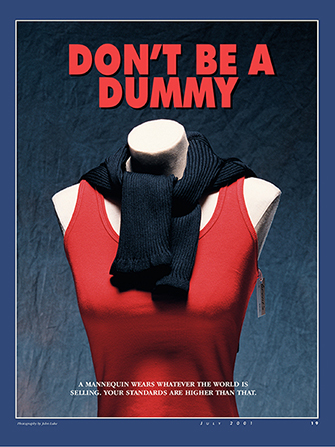
Don't Be A DummyThis morning, I was struck by this thought-provoking sentence: “I don’t know one of [my own circle of girlfriends] who doesn’t have feelings of lingering discomfort regarding her own sexual past.” I read this in a footnote to a talk in a recent LDS General Conference interestingly titled, “The Moral Force of Women.”

The entire two-paragraph context by author Jennifer Moses is good:

So here we are, the feminist and postfeminist and postpill generation. We somehow survived our own teen and college years (except for those who didn’t), and now, with the exception of some Mormons, evangelicals and Orthodox Jews, scads of us don’t know how to teach our own sons and daughters not to give away their bodies so readily. We’re embarrassed, and we don’t want to be, God forbid, hypocrites.

Still, in my own circle of girlfriends, the desire to push back is strong. I don’t know one of them who doesn’t have feelings of lingering discomfort regarding her own sexual past. And not one woman I’ve ever asked about the subject has said that she wishes she’d “experimented” more.

Don't Short Change YourselfIn fact, the entire WSJ article is good, and not only because it stirred up a strident response. (See “Why Do We Let Them Dress Like That?”, Jennifer Moses, Wall Street Journal, 19 Mar 2011, Page C3). Here is a selection from the address that referenced Moses’ article:

[In the view of many in the world, in sharp contrast to God’s view,] there has long been a cultural double standard that expected women to be sexually circumspect while excusing male immorality. The unfairness of such a double standard is obvious, and it has been justifiably criticized and rejected. In that rejection, one would have hoped that men would rise to the higher, single standard, but just the opposite has occurred—women and girls are now encouraged to be as promiscuous as the double standard expected men to be. Where once women’s higher standards demanded commitment and responsibility from men, we now have sexual relations without conscience, fatherless families, and growing poverty. Equal-opportunity promiscuity simply robs women of their moral influence and degrades all of society. In this hollow bargain, it is men who are “liberated” and women and children who suffer most. (“The Moral Force of Women”, D. Todd Christofferson, LDS General Conference, Oct 2013. )

In his address, Christofferson also teaches us the importance of appreciating everyone’s influence for good, regardless of the ways they work all day: “A pernicious philosophy that undermines women’s moral influence is the devaluation of marriage and of motherhood and homemaking as a career. Some view homemaking with outright contempt, arguing that it demeans women and that the relentless demands of raising children are a form of exploitation. They ridicule what they call “the mommy track” as a career. This is not fair or right. We do not diminish the value of what women or men achieve in any worthy endeavor or career—we all benefit from those achievements—but we still recognize there is not a higher good than motherhood or fatherhood in marriage.”
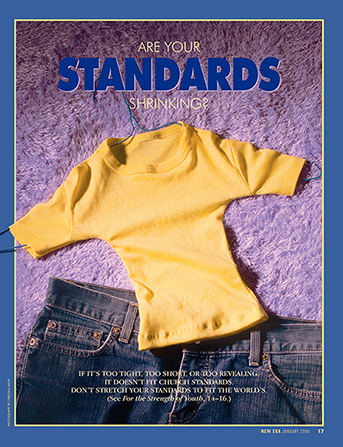
Are Your Standards ShrinkingIn a second footnote are cited important words from another address: “If being ‘selfless’ means a woman must give up her own inner identity and personal growth, that understanding of selflessness is wrong… But today’s liberationist model goes too far the other way, stereotyping women as excessively independent of their families. A more sensible view is that husbands and wives are interdependent with each other… The critics who moved mothers from dependence to independence skipped the fertile middle ground of interdependence. Those who moved mothers from selflessness to selfishness skipped the fertile middle ground of self-chosen service that contributes toward a woman’s personal growth. Because of these excesses, debates about the value of motherhood have, ironically, caused the general society to discount not only mothers but women in general.” (“Motherhood and the Moral Influence of Women”, Bruce C. Hafen, World Congress of Families II, Geneva, Switzerland, Plenary Session IV, 16 Nov 1999.)

Some may assume that these thoughts refer to virtue, to dressing modestly, or to the value of a working woman, rather than viewing them as a related whole. For me, the issue here is one of influence and of power. Women wield power and influence in diverse ways, and everyone should appreciate good work, independent of where a woman chooses to do it. I have learned for myself that, regardless of our views, it is selfish to say unkind things. We can learn to use our power and influence to build rather than to belittle, even if a person makes choices we would not make for ourselves. Women should not limit themselves to roles that others define for them. The far-reaching effects of the power and influence of women is well described in and certainly not limited to the why-do-we-let-our-kids-wear-immodest-clothes article by Jennifer Moses, Matt Walsh’s …Me?-Ha!-I-WORK! post, Sheri Dew’s two-are-better-than-one talk, or Julie Beck’s mothers-who-know address. “The world’s greatest champion of woman and womanhood is Jesus the Christ.” (Daughters in My Kingdom: The History and Work of Relief Society, Page 3.)

Early in her life, my wife nurtured a strong desire to be a woman of power and a woman of influence. She decided that she could do that most effectively by choosing to stay at home to raise a family. Her influence on our six adult children and on their families cannot be measured. That is influence; that is power. We are grateful for her wisdom to wield these skills in such a way as to have a true impact on society.

——– End of Post ——–

WebCredits—List of web resources used in this post but not explicitly credited above:

  • Poster, Don’t Be A Dummy: A mannequin wears whatever the world is selling. Your standards are higher than that.—www.lds.org/media-library/images/mormonads/dress-and-appearance?lang=eng#mormonad-dont-be-a-dummy-1118328 [Church standards of modesty apply equally to all genders.]
  • Poster, Don’t Short Change Yourself: The way you dress advertises your standards. Send the right message. (See For The Strength Of Youth, P. 8.)—www. lds.org/media-library/images/mormonads/dress-and-appearance?lang=eng#mormonad-short-change-1118313 [Church standards of modesty apply equally to all genders.]
  • Article, “Why Do We Let Them Dress Like That?”, Jennifer Moses, Wall Street Journal, 19 Mar 2011—online.wsj.com/news/articles/SB10001424052748703899704576204580623018562
  • Address, “The Moral Force of Women,” D. Todd Christofferson, LDS General Conference, Oct 2013—www. lds.org/general-conference/2013/10/the-moral-force-of-women?lang=eng
  • Poster, Are Your Standards Shrinking? If it’s too tight, too short, or too revealing, it doesn’t fit church standards. Don’t stretch your standards to fit the world’s. (See For The Strength Of Youth, P. 14-16.)—www. lds.org/media-library/images/mormonads/dress-and-appearance?lang=eng#mormonad-standards-shrinking-1118383 [Church standards of modesty apply equally to all genders.]
  • Address, “Motherhood and the Moral Influence of Women,” Bruce C. Hafen, World Congress of Families II, Geneva, Switzerland, Plenary Session IV, 16 Nov 1999 —worldcongress.org/wcf2_spkrs/wcf2_hafen.htm
  • Blog Post, “You’re a stay-at-home mom? What do you DO all day?”, Matt Walsh—themattwalshblog.com/2013/10/09/youre-a-stay-at-home-mom-what-do-you-do-all-day/
  • Address, “It Is Not Good for Man or Woman to Be Alone”, Sheri L. Dew, LDS General Conference, Oct 2001—www. lds.org/general-conference/2001/10/it-is-not-good-for-man-or-woman-to-be-alone?lang=eng
  • Address, “Mothers Who Know”, Julie B. Beck, LDS General Conference, Oct 2007—www. lds.org/general-conference/2007/10/mothers-who-know?lang=eng
  • Book, Daughters in My Kingdom: The History and Work of Relief Society (2011, Intellectual Reserve, Inc., United States of America)—www. lds.org/relief-society/?lang=eng

——– End of WebCredits ——–

Being Brave: Pre-mortality, Priesthood Power, and the Family Proclamation

A friend just shared this Vocal Point video with me, and an entire post popped in my head. The song is “(I Want To See You Be) Brave,” by Sara Bareilles. I thought of my wife, Kim, of our six adult kids and their families. I especially liked the sign that reads, “When I talk to new people.”

As a Mormon, as a member of The Church of Jesus Christ of Latter-day Saints, I  believe that we lived with God before we were born. True of anyone. And by celestial design, none of us remember — It was all veiled at birth. For eons before we came here, we studied hard, acquired knowledge, and learned skills, all with the goal of trying our guts out to live as God had taught and to do whatever we could to keep ourselves and others on the narrow path back to him. As we prepared with him for the moment of our birth, we knew that we would learn more from life on earth, because here we would be able to learn to walk not by memory, not by sight, but by faith, for the first time making decisions on our own in an environment where Heavenly Father was no longer around. As he sent us off, I wonder if he was singing to us a similar pre-lullaby message of “I want to see you be brave!”

This idea of a pre-existence changes many a perspective. I see my body not as mine, not to do with as I please, but as a temple of God, a gift from him, a house for my spirit now that I’m no longer with him. Such a view demands that I treat my body with respect and not with selfishness. The idea of a pre-mortal life and the idea of your body being a temple and not your own are ideas that permeate the popular post of Mormon blogger Seth Adam Smith, “Marriage Isn’t For You” (at his blog or at Huffington Post). His earthly father taught him, “Marriage isn’t for you. It’s not about you. Marriage is about the person you married.” While I heartily agree, I also counsel our kids as they head to the altar that marriage is so dang fun (for themselves as well as for their spouse).

These ideas and others are discussed concisely in the LDS Family Proclamation. These ideas help protect me, keep me be safe and secure. These perspectives, these teachings, are why families are so important. Families help us get ourselves back to God.

And in addition to giving us a family to help, God went further to give us another gift, both urgent and important. He allowed us to have a portion of his power. He gave us his priesthood, the authority to act for him, to do what he would do, if he were here with his ample arm around us, whispering what he would like us to know, to do, to be, to become. The priesthood of God isn’t for some and not for others — It’s for any of us, for all of us. It applies equally to people of any gender, in any country, of any position in life. For example, watch how Sheri Dew answers the great question: “In the Church of Jesus Christ of Latter-day Saints, what do women get?”

http://www.youtube.com/watch?v=-QYlDLChzig

I can see how God sent ALL of us here well prepared, not just to thrive, but to fight to find our way back. When we’re unsure of the path, he continues to guide us. We call that prayer, and it works like a phone. With a bit of effort, it’s a two-way communication device. Beats a cell phone or Star Trek communicator with a stick.

Dieter Uchtdorf taught us to be brave against doubt when he said, referring to another’s phrase which was first penned in 1924: “It’s natural to have questions—the acorn of honest inquiry has often sprouted and matured into a great oak of understanding. One of the purposes of the Church is to nurture and cultivate the seed of faith—even in the sometimes sandy soil of doubt and uncertainty. Therefore, my dear brothers and sisters—my dear friends—please, first doubt your doubts before you doubt your faith.” (See F.F. Bosworth, Christ the Healer (1924), Page 23, as quoted in “Come, Join With Us”.)

Most importantly, these perspectives shift my thinking, so that I tend to view life through a lens of patience and peace. These ideas give me hope and humility. Seth’s dad is spot on — It isn’t all about me. Sometimes, I don’t want my stinkin’ thinkin’ shifted, but if I learn to adjust my vision to a more godly perspective, I realize that it was short-sighted to fight the shift in thought. I hope it makes me a better husband, a better father, a better man, a better person. It helps me be brave.

From the lyrics of Brave: “Show me how big your brave is.”

Seeing Ourselves As Brave -- Being Brave For Others

Seeing Ourselves As Brave — Being Brave For Others

——– End of Post ——–
WebCredits—List of web resources used in this post but not explicitly credited above:

  • Video, “Brave by Sara Bareilles—BYU Vocal Point (a cappella tribute)”—www. youtube.com/watch?v=XeX3r8j66Qk
  • Blog Post, “Marriage Isn’t For You”, Seth Adam Smith—sethadamsmith.com/2013/11/02/marriage-isnt-for-you/
  • Blog Re-post, “Marriage Isn’t For You”, Seth Adam Smith—
    www. huffingtonpost.com/seth-adam-smith/marriage-isnt-for-you_b_4209837.html
  • Document, The Family: A Proclamation to the World
    www. lds.org/topics/family-proclamation
  • Video, “Lean on My Ample Arm”—www. youtube.com/watch?v=iWn48w7vX80
  • Hymn, “Lean on My Ample Arm”, music, recordings, lyrics—www. lds.org/music/library/hymns/lean-on-my-ample-arm?lang=eng
  • Video, “What Do LDS Women Get?”—www. youtube.com/watch?v=-QYlDLChzig
  • Address, “Come, Join With Us,” Dieter F. Uchtdorf, LDS General Conference Oct 2013—www. lds.org/general-conference/2013/10/come-join-with-us
  • Illustration, Seeing Ourselves As Brave — Being Brave For Others—https://www. lds.org/media-library/images/primary/illustrations?lang=eng#children-barking-dog-778662

——– End of WebCredits ——–

Showing Initiative, Saving Goals, and Second Efforts

Mongolian Archer

Mongolian Archer

At the archery portion of the Naadam Festival held in July each year in Ulaanbaatar, a female archer in elegant Mongolian dress aims to topple a small wall of marked blocks from over half a football field away. The skill demonstrated by the archers in the competition is absolutely amazing as they more often than not hit the center portion of the marked blocks.

For Hunger Games archer Katniss Everdeen, it was take initiative or starve to death. After her father died and her mother was crippled with grief, feeding the family fell to Katniss. It took time, but she learned to recognize that she had developed skills that could save her family if she would put to work the tools her father had given her:

For a while, I hung around the edges of the Meadow, but finally I worked up the courage to go under the fence. It was the first time I’d been there alone, without my father’s weapons to protect me. But I retrieved the small bow and arrows he’d made me from a hollow tree. I probably didn’t go more than twenty yards into the woods that day. Most of the time, I perched up in the branches of an old oak, hoping for game to come by. After several hours, I had the good luck to kill a rabbit. I’d shot a few rabbits before, with my father’s guidance. But this I’d done on my own.

We hadn’t had meat in months… The woods became our savior, and each day I went a bit farther into its arms. It was slow-going at first, but I was determined to feed us. (The Hunger Games, Chapter 4, Paragraphs 17-19, Pages 50-51)

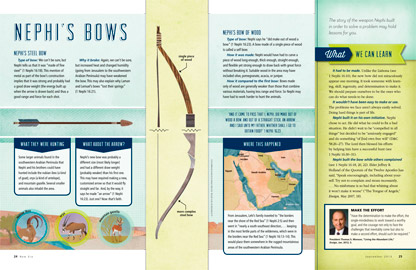
Nephi also learned to show initiative when faced with severe difficulties. His ability to feed his family was threatened when his bow made of fine steel was broken. He made a decision that saved his family. While others complained, he set a self-imposed goal: To make a bow of wood and to put it to work. Nephi would have had to carve a piece of wood long enough, thick enough, straight enough, and flexible yet strong enough to draw back with great force without breaking it. Suitable wood in the area may have included olive, pomegranate, acacia, or juniper.

Nephi Finds Food While Others Complained

But it’s what he did next that sets Nephi apart. He went to his spiritual leader to seek his counsel. And it came to pass that I, Nephi, did make out of wood a bow, and out of a straight stick, an arrow. … And I said unto my father: Whither shall I go to obtain food?

Nephi chose to act. He did what he could to fix a bad situation. He didn’t wait to be “compelled in all things” but decided to be “anxiously engaged” and to do something “of [his] own free will” (D&C 58:26–27). The Lord then blessed his efforts by helping him to have a successful hunt (1 Nephi 16:29–31). His goals were not just self-imposed goals; they were goals that saved his family.

Clay Christensen and Ideas That Change The World

Clayton M. Christensen has put this same lesson to work. As a world-renowned innovation expert and the Kim B. Clark Professor of Business Administration at the Harvard Business School, he has bit of experience with showing initiative. Throughout his book, The Power of Everyday Missionaries, Clay describes repeatedly how he has used self-imposed goals to bring about incredible changes in his own life and in the lives of others. No simple quote — Just lots of inspiring counsel from one who knows, from one who learned by doing.

I have learned for myself the importance of showing initiative. It helps us to aim high, to stretch ourselves and our bowstrings, and to reach new goals. It especially helps when we seek counsel from a trusted spiritual leader. And I know that by so doing, we may save our ourselves and our families.

Nephi's Bows

Nephi’s Bows

Article: Nephi’s Bows

PDF: Nephi’s Bows

——– End of Post ——–
WebCredits—List of web resources used in this post but not explicitly credited above:

  • Photo, Mongolian Archer—www .pinterest.com/jurekes/arco/
  • Book, The Hunger Games, Suzanne Collins (2008, Scholastic Press, New York NY), ISBN 978-0-439-02348-1
  • Painting, Nephi Finds Food While Others Complained—www.lds.org/manual/book-of-mormon-student-manual/chapter-5-1-nephi-16-18
  • Photo, Ideas That Change The World—www.claytonchristensen.com
  • Book, The Power of Everyday Missionaries: The What and How of Sharing the Gospel, Clayton M. Christensen (2012, Deseret Book, Salt Lake City UT), ISBN 978-1-60907-315-2 (paperbound), 978-1-60907-316-9 (hardbound)
  • Article, “Nephi’s Bows”, New Era, Sep 2013, www .lds.org/new-era/2013/09/nephis-bows?lang=eng
    or www.lds.org/bc/content/shared/content/images/magazines/new-era/2013/09/ne13sep24-25-000-nephis-bows.pdf

——– End of WebCredits ——–

Keeping The Right Balls In The Air

What makes a strong family?
“How we preserve time for family is one of the most significant issues we face in most cultures.

“At a time when I was…in our law firm, one lawyer explained to me how she always felt like a juggler trying to keep three balls in the air at the same time. One ball was her law practice, one was her marriage, and one was her children. She’d almost given up on time for herself. She was greatly concerned that one of the balls was always on the ground. I suggested we meet as a group and discuss our priorities. We determined that the primary reason we were working was to support our families. We agreed that making more money wasn’t nearly as important as our families, but we recognized that serving our clients to the best of our abilities was essential. The discussion then moved to what we did at work that was not necessary and was inconsistent with having time for family. Was there pressure to spend time in the workplace that was not essential? We decided that our goal would be a family-friendly environment for both women and men. Let us be at the forefront in protecting time for family.” (“Lamentations of Jeremiah: Beware of Bondage,” Quentin L. Cook, LDS General Conference, Oct 2013.)

Strength Against The Storm

What makes a strong family? The importance of a strong family narrative is highlighted in the New York Times article on well-researched studies on vital long-term benefits of family history,
The Stories That Bind Us“:

The more children knew about their family’s history, the stronger their sense of control over their lives, the higher their self-esteem and the more successfully they believed their families functioned. The “Do You Know?” scale turned out to be the best single predictor of children’s emotional health and happiness.

“We were blown away,” Dr. Duke said.

And then something unexpected happened. Two months later was Sept. 11. As citizens, Dr. Duke and Dr. Fivush were horrified like everyone else, but as psychologists, they knew they had been given a rare opportunity: though the families they studied had not been directly affected by the events, all the children had experienced the same national trauma at the same time. The researchers went back and reassessed the children.

“Once again,” Dr. Duke said, “the ones who knew more about their families proved to be more resilient, meaning they could moderate the effects of stress.”

Why does knowing where your grandmother went to school help a child overcome something as minor as a skinned knee or as major as a terrorist attack?

“The answers have to do with a child’s sense of being part of a larger family,” Dr. Duke said.

The bottom line: if you want a happier family, create, refine and retell the story of your family’s positive moments and your ability to bounce back from the difficult ones. That act alone may increase the odds that your family will thrive for many generations to come.

Strong narrative, strong family, strong kids. In the world we live in, we are expected to keep more and more balls in the air, with fewer and fewer on the ground. Well do I ask myself: How will I manage it? How will my adult kids and grandkids?

Maybe it’s a matter of Good, Better, Best?

How do YOU preserve time for family, for self?

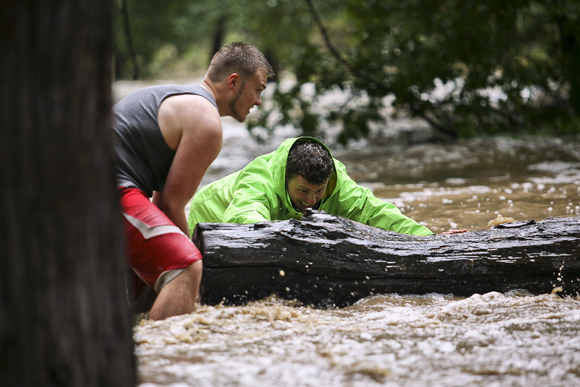
Strength To Manage Floods That Happen In Life

——– End of Post ——–
WebCredits—List of web resources used in this post but not explicitly credited above:

  • Photo, keeping the balls juggling in the air—womenonthefence.com/2009/11/25/keeping-the-balls-juggling-in-the-air/
  • Address, “Lamentations of Jeremiah: Beware of Bondage,” Quentin L. Cook, LDS General Conference, Oct 2013—www .lds.org/general-conference/2013/10/lamentations-of-jeremiah-beware-of-bondage?lang=eng
  • Photo, Strength Against The Storm—ngm.nationalgeographic.com/2012/09/extreme-weather/miller-text
  • Article, “The Stories That Bind Us”, Bruce Feiler, New York Times, 15 Mar 2013—www .nytimes.com/2013/03/17/fashion/the-family-stories-that-bind-us-this-life.html
  • Address, “Good, Better, Best,” Dallin H. Oaks, LDS General Conference, Oct 2007—www .lds.org/general-conference/2007/10/good-better-best?lang=eng
  • Photo, Strength To Manage Floods That Happen In Life—www.cuindependent.com/2013/09/17/photos-cu-independents-coverage-of-the-boulder-flood/46514

——– End of WebCredits ——–

So Many Questions, So Little Time

Questions are important. Questions can be good. Questions, like anything else, come in various shapes and sizes, such as Good, Better, Best.

Thor Learning To Ask Better Questions

As do we mere mortals, Thor (God of Thunder) learned this the hard way. “My father was trying to teach me something, and I was too stupid to see it… I had it all backwards. I had it all wrong.” His friend, Erik, counseled him, “It’s not a bad thing finding out that you don’t have all the answers. You start asking the right questions.” Always tough, yet always rewarding.

Mike Nielson from Rogers, Arkansas, learned the importance of asking and discussing really good questions:

(Or same video at lds.org link.)

To Where May Questions Lead?
With his friend, Jeremy, Mike began to learn why dialogue is important. Bob Millet, former dean of Religious Education at BYU (Brigham Young University), learned this lesson as well with his friend, Pastor Greg Johnson. “I was surprised when [Greg] then said to the group: ‘Are you listening to Bob? Do you hear what he is saying? This is important! It’s time for us to stop criticizing Latter-day Saints on matters they don’t even teach today.’ …The last question asked was by a middle-aged man: ‘This thrills my soul. I think this is what Jesus would do. I have lived in Utah for many years, and I have many LDS friends. We get along okay; we don’t fight and quarrel over religious matters. But we really don’t talk with one another about the things that matter most to us–that is, our faith. I don’t plan to become a Latter-day Saint, and I’m certain my Mormon friends don’t plan to become Evangelical, but I would like to find more effective ways to talk heart to heart. Could you two make a few suggestions on how we can deepen and sweeten our relationships with our LDS neighbors?’ (Read on? Click here, Page 15.)

Questions May Lead To Certainty
My wife, Kim, and I usually see things from different points of view. Even though we know we are equally yoked in our responsibilities as spouses and as parents, each of us sees life through a different lens, and we focus on different things. We help each other to ask the best questions. I am the man who has the keys and she is the woman who has the influence (see Paragraph 8 in the section “Teaching the Rising Generation” in this address), and together we strive to bring about the work that God wants us to do in our family and in our community. By asking the right questions, I have learned for myself that working together with Heavenly Father allows any couple to raise children who find certainty in uncertain times.

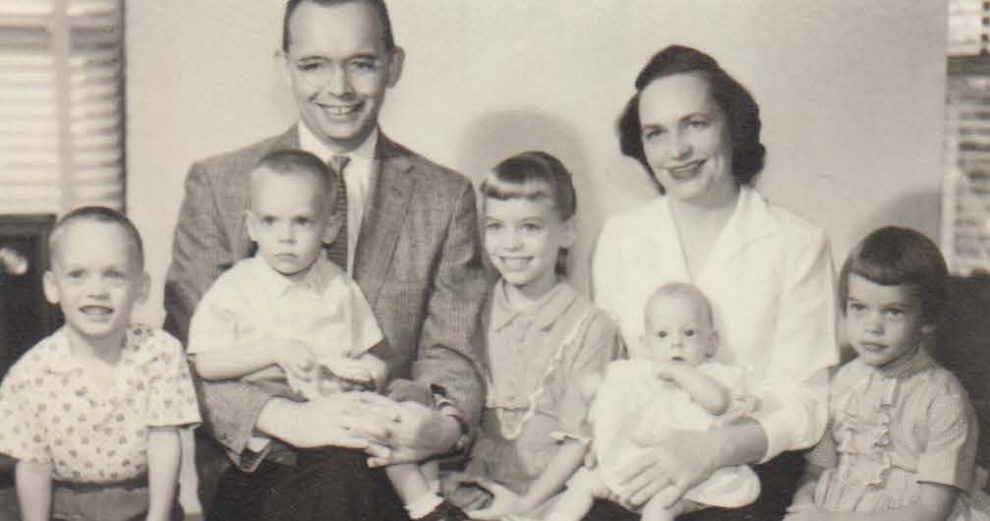
Finding Certainty Together By Asking Great Questions

Finding Certainty Together By Asking Great Questions

——– End of Post ——–
WebCredits—List of web resources used in this post but not explicitly credited above:

  • Address, “Good, Better, Best”, Dallin H. Oaks, LDS General Conference, Oct 2007—www .lds.org/general-conference/2007/10/good-better-best?lang=eng
  • Photo, “Thor Learning To Ask Better Questions”—musingsfrommarsh.blogspot.com/2012/06/thor-co.html
  • Article, “What Is Our Doctrine?”, Robert L. Millet, The Religious Educator, 2003, p. 15—ojs.lib.byu.edu/spc/index.php/RelEd/article/viewFile/1950/1911
  • Address, “Teaching the Doctrine of the Family”, Julie B. Beck, Ensign, Mar 2011—www .lds.org/ensign/2011/03/teaching-the-doctrine-of-the-family?lang=eng

——– End of WebCredits ——–
Privileges, Potentials And Principles

GlassesHaving trouble seeing, you say? My glasses work great. They really help me see a lot better. Here, put them on — I’m sure they’ll work for you, too. No, really, try them…

Swiss countryside through train window

Swiss Countryside Through Train Window

Have you ever noticed how we all see things differently? I’ve had experiences in which, **POP**, my vision changes and I see things in a totally new light. For example, as we traveled by train from Switzerland to Italy, our cabinmate happened to be a young Swiss woman returning from home to her studies in Italy. Out the window, I saw with interest how the scenery changed from the über neat, carefully kept Swiss houses, each looking like a music box cottage, to the houses of the Italian countryside, with a few roof tiles askew and some external wall plaster that needed patching. Initially, I was disappointed with some of the residents of Italy, thinking, “Don’t they care?” I mentioned it to our new student friend, and she said simply, “Yes, isn’t it quaint?” **POP** I began to see these dwellings through her eyes — Instantly, I got it, and in place of the seemingly dilapidated houses I had seen in my mind’s eye just a moment before, the homes looked lovely to me. Suddenly, I couldn’t make these homes stay in the train window long enough, and I missed them after they disappeared from view. I thanked our friend, and I was stunned by the speed of the process by which she helped me to adjust my vision.

Sometimes, the needed adjustment is of little consequence. For example, who knew of the potential to use one’s body as a percussion instrument?

http://www.youtube.com/watch?v=lWZcRTSnX2A&feature=youtu.be

At other times, however, the needed adjustment may indeed be costly, especially when we underestimate our privileges or our potential:

As Dieter Uchtdorf is teaching, the costs can be great of not seeing my own potential. The potential for poor vision increases as I base my views on poor principles. Since I live in a world where principles are prized less and less, where principles are more and more mocked and scorned, discarded as a garment in a hot furnace, sad experience has taught me the importance of seeing on a higher plane.

Young Man Adjusting His Vision

Young Man Adjusting His Vision

I have learned for myself that I achieve little or nothing when I fight against God — That’s when I fail. In contrast, I am most successful, I achieve things of eternal importance, when I succeed in getting my understanding to **POP**, when I adjust my vision, when I see others as the Lord sees them, when I see myself as the Lord sees me. And I have learned for myself that this is true for each of us, for all of us.


——– End of Post ——–

WebCredits—List of web resources used in this post but not explicitly credited above:

  • Drawing, glasses—www.123rf.com/photo_8284355_cartoon-eyes-with-glasses.html
  • Photo, “Swiss Countryside Through Train Window”—graphics.stanford.edu/~lucasp/pictures/switzerland/countryside/
  • Address, “Your Potential, Your Privilege”, Dieter F. Uchtdorf, LDS General Conference, Apr 2011—www .lds.org/general-conference/2011/04/your-potential-your-privilege?lang=eng
  • Photo, “Young Man Adjusting His Vision”—www.lds.org/media-library/images/youth/gospel-living?lang=eng&start=11&end=20#young-man-praying-738191
  • Photo, “Mountains Through Train Window”—mattstansberryblog.wordpress.com/2009/12/16/rome-day-5/train-window/

——– End of WebCredits ——–

train-window

Mountains Through Train Window

Bats, Courage, And The Modern Pioneer

Townsend's Big-eared Bat

Townsend’s Big-eared Bat

Our prophet has recently highlighted the global need for pioneers today. In what ways can we be a pioneer?

Bats And Blind, Shallow Courage
I was a pioneer once, and it was scary. A friend with a new baby called and asked my son, Todd (then in high school), if he could come help her out—Her husband wasn’t at home, and she had a bat in her house.  It seems that bats and mothers of new babies don’t do well together. Todd assured her that he’d be right over. Then he called me immediately. I was in a meeting, which was terminated for the bat. Neither Todd nor I had any batty experience; it was just the blind leading the bat. Fortunately for us, our friend happened to have a wastecan, which we emptied in order to shroud the squeaky thing. Fortunately for the bat, it had become more orderly by the time we arrived. We grabbed the empty can and a piece of cardboard large enough to cover the mouth of the wastebasket, calmly placed the container over the stationary animal, inserted the cardboard between the can and the wall, and carried the contained bat outside. Our meager courage did not fail.    

While our winged mammal required us to have courage, its capture is a fairly wussy example of being a modern pioneer. Dictionary.com defines a pioneer as “one who is first to settle a region for development by others” or “one who is among the earliest in a field of inquiry, enterprise or progress.” So there may be a lot to learn from a non-wussy pioneer. For instance, there’s Matt Harding. Stuck in a job he didn’t enjoy, he decided that he was willing to take a risk and try something new. He has turned his silly characteristic dance into a video model of global community outreach, and people all over the world jostle to be with Matt, to laugh, jump and clap hands together. Now, it’s his full-time (yes, paying) job. All from some great music and from being willing to dance badly in front of people: Fun to watch.

Seeing More Deeply
So why pioneer? What’s the urgency to pioneer? The importance? As President Monson taught us, “We forget how the Greeks and Romans prevailed magnificently in a barbaric world and how that triumph ended—how a slackness and softness finally overcame them to their ruin. In the end, more than they wanted freedom, they wanted security and a comfortable life; and they lost all—comfort and security and freedom.” (See Paragraph 11.)

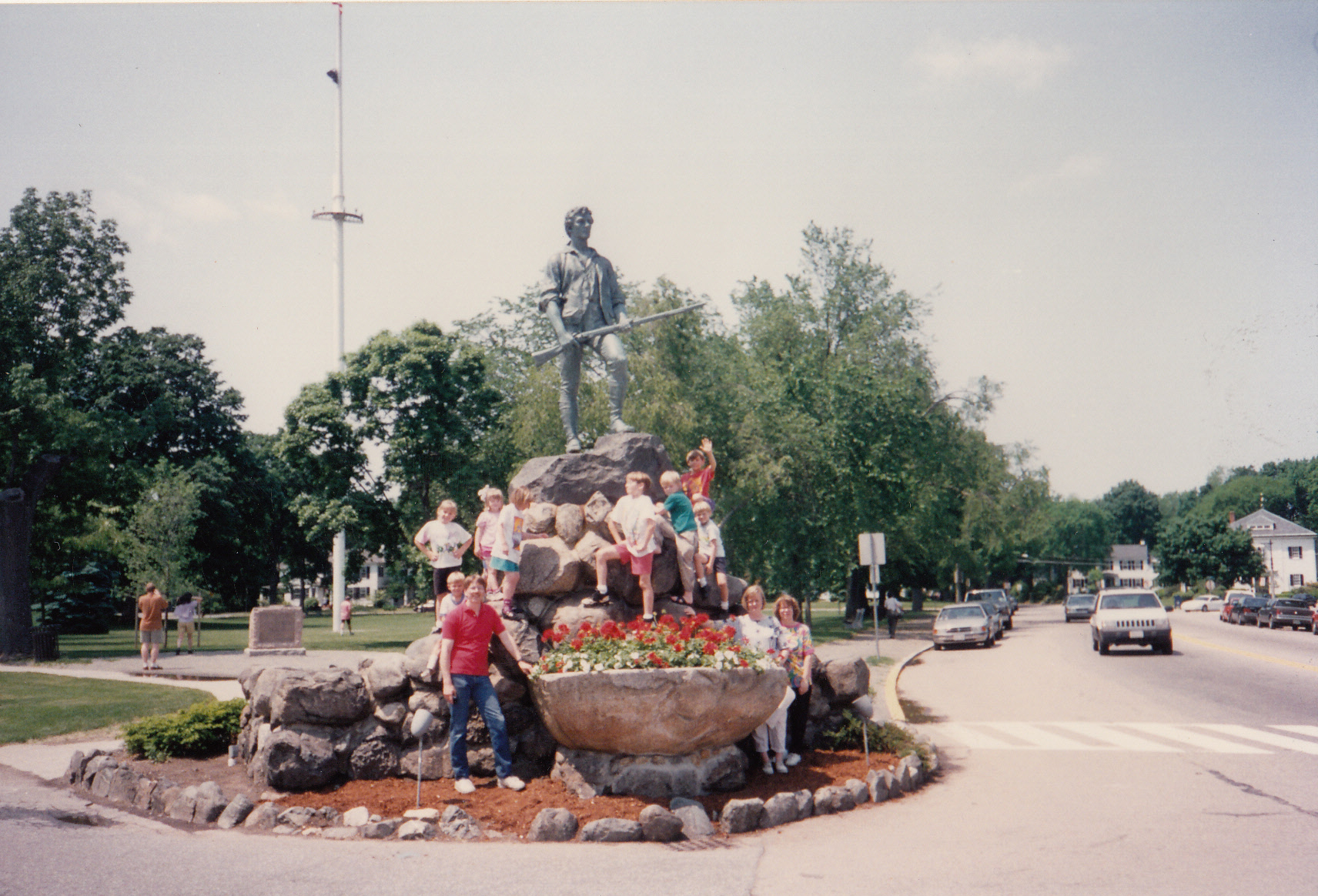
Learning Our Heritage--Minute Men in the Making at Lexington

Learning Our Heritage: Minute Men In The Making At Lexington, Massachusetts

I love the hymn They, the Builders of the Nation. Becoming a pioneer today takes courage, and it takes some out-of-the-box thinking. How may each of us be a “pillar, guide, and inspiration to the hosts of waiting youth”? (See Verse 3—sing, read or listen.) What are some important ways that we may broaden our understanding of how to serve more effectively the community around us? How to serve those who may have needs that we don’t perceive, and how we may be a part of meeting those unmet needs? Each of us can do things to become modern-day pioneers and to tread new ground in some important ways. Even if it isn’t to us, it can be very important to whom we serve.

Bogatyri (“Valiant Warriors of Old”) (1898), Viktor Vasnetsov

Bogatyri (“Valiant Warriors Of Old”) (1898), Viktor Vasnetsov

Now that I think deeper, I was indeed a pioneer when I hurried to help my friend whose wife and family had just died in a plane crash. Despite being suicidal at the time, he and I bonded, and in his darkest moments, his extended family would seek me out repeatedly: “Come, Davy—Come quick. He needs you again.” I’d hasten once more to his side—we’d sit, sometimes talk, but I felt that our hearts were in constant conversation, even in silence, and I could feel him taking strength from me, and I gave freely, for I knew that I had strength to spare. By connecting with those around him, with people for whom he cared deeply, he quickly learned to develop his own sources of strength.

Again, I was a pioneer when I served diligently in our congregation as a home teacher (volunteer shepherd) to a family with five young children. Despite his severe substance abuse concerns, this young father and I bonded easily, and he sometimes called me in the wee hours when the pull of drugs was strong and he was weak and needed to talk. As we’d sit on the stoop of his small house in the darkness, we’d have the most amazing talks filled with light. He opened the door to whole new era in my home teaching experience when one day, he interrupted me mid-sentence to ask, “How do you do it, Dave? How do you get us to feel these things?” We opened our hearts to each other like never before, and our souls were knit together like David and Jonathan of old. It was as if we could read each other’s minds. When we talked of truths at night (Hymn 147, “Sweet Is the Work,” end of Verse 1), I remember many times thinking, “There is nowhere else on earth that I would rather be than right here, right now, on this stoop, talking with this man.” I could feel him taking courage from me, and I gave freely, for I knew that I had courage to spare. He moved away, then I moved, and always I will miss our conversations.

Consider More Deeply
So, consider increasing your courage. Do what is right. Serve others not on your terms but on theirs; meet them on their level not yours. Get out of your box. Each of us may enjoy doing what we can to stand with other people for that which is good, for that which we know to be right. Be a pillar, a guide. Maybe be an inspiration. Maybe to youth. Couldn’t we all benefit from spending some time to consider how we may improve our efforts to become a modern pioneer? I know I will.

Modern Pioneers in Many Ways

Modern Pioneers In Many Ways

——– End of Post ——–
WebCredits—List of web resources used in this post but not explicitly credited above: 

  • Photo, “Townsend’s Big-eared Bat”—en.wikipedia.org/wiki/File:Big-eared-townsend-fledermaus.jpg
  • Address, “The World Needs Pioneers Today”, President Thomas S. Monson, Ensign, Jul 2013—www .lds.org/ensign/2013/07/the-world-needs-pioneers-today?lang=eng
  • Painting, «Богатыри» Or Bogatyri (“Valiant Warriors Of Old”) (1898), Viktor Vasnetsov (Tretyakov Gallery, Moscow)—en.wikipedia.org/wiki/File:Die_drei_Bogatyr.jpg
——– End of WebCredits ——–

Prayer And Getting Out Of Our Comfort Zone

Knock, And It Shall Be Opened Unto You

Knock, And It Shall Be Opened Unto You

To include prayer in our lives is to invite sacred moments into our lives. Watch the video Earthly Father, Heavenly Father:

(Or same video at lds.org link.)

I love the words of the narrator as we focus on his wedding ring at Time 2:53 and the kid at the door watching his parents pray at 2:34. When I walked in to see my own parents at prayer, I remember the whoosh of feelings of safety and security but mostly of sacredness.

My favorite memory of the power of a prayerful life is one at work. I knocked on a friend’s office door; normally, he responds quickly with, “Come in!”, and I open the door. Sometimes, I’ll hear water running in the office bathroom as he makes ablution, and I know not to knock at the door for a few minutes after he returns to his office. But this day I was distracted and failed to notice that my knock at the door from without brought no invitation voiced from within. Out of habit, I called him by name, adding the customary honorific suffix, and opened the door. I found my elderly friend kneeling lowly on his prayer rug. It was such a holy moment. In a familiar whoosh of feeling, I was aware that I had missed the cues of the sounds at the sink. Having cleansed himself without as he focused on cleansing himself within, he was now talking with his Maker, expressing humility without as he voiced humility within. It was just like walking in on my parents at prayer. After prayers were done, we embraced; I apologized for disturbing a sacred moment. “Oh, I don’t mind. I am just doing my duty,” he said. I replied, “It is the duty of us all.”

When I think of my favorite moments of prayer, I will always see in my mind and in my heart an elderly man from Uzbekistan, with shoes removed from off his feet, kneeling submissively on sacred ground in his office, visible to none but to Him who sees all.

I shall be telling this with a sigh
Somewhere ages and ages hence:
Two roads diverged in a wood, and I,
I took the one less traveled by,
And that has made all the difference.
-Robert Frost

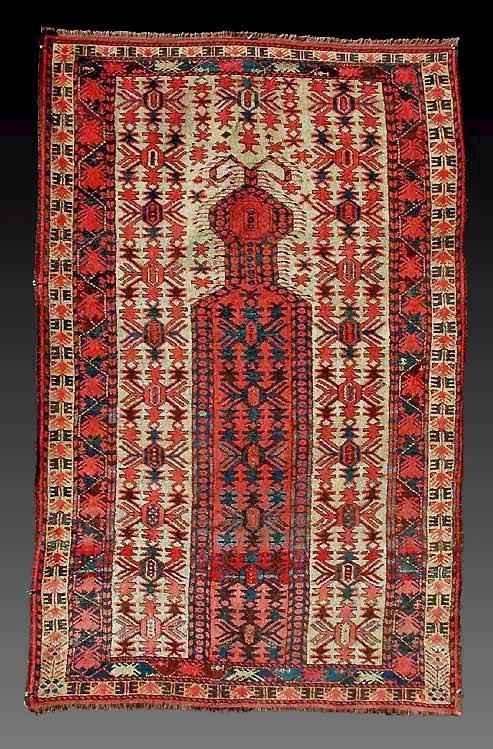
Vintage Prayer Rug

Vintage Prayer Rug

——– End of Post ——–
WebCredits—List of web resources used in this post but not explicitly credited above:

  • Photo, “Knock, And It Shall Be Opened Unto You”—westsoundmodern.wordpress.com/2011/05/11/go-away-im-washing-my-hair-2/knock-knock-3/
  • Video, “Earthly Father, Heavenly Father”—www. youtube.com/watch?v=R5FxdCgD-qI
  • Photo, “Vintage Prayer Rug”—www .persiancarpetguide.com/sw-asia/Rugs/Turkmen/Arsary/Arsary94.htm
  • Photo, young-man-kneeling-in-prayer-from-Chap 5-ETBenson-manual—www .lds.org/manual/teachings-of-presidents-of-the-church-ezra-taft-benson/chapter-5-principles-of-true-repentance?lang=eng

——– End of WebCredits ——–

young-man-kneeling-in-prayer-from-Chap 5-ETBenson-manual target=

Broken/Intact Measures Of Success

Burnt-out Fuse

At work, I have a friend, Roseanne (names have been changed), who cleans our hallway and offices. Currently, she has some personal challenges and misses a lot of work. Patrice, a mutual friend who cleans when Roseanne is gone, is a person of strong faith and has asked me to pray for Roseanne. We’ve had some great talks, and at the end, she always reminds me of the need to keep Roseanne in our prayers. The other day, as Patrice and I talked, I felt strongly that I should tell her that I was a Mormon. Given her classic Christian faith traditions, I immediately rejected the thought, knowing that it would not end well. I again felt prompted to mention my Mormon faith, and after arguing with myself (“This REALLY will NOT end well!”), I concluded that this was in truth a prompting from a celestial source and that I should follow it. I said, “Patrice, I’ll be glad to continue praying. You know, as a Mormon, my family has an active daily prayer life, and I’ll surely keep Roseanne in my prayers.”

Patrice’s face fell, and she ended the conversation abruptly. My first thought: I had been right – It did not end well. My second thought, influenced I believe by the Holy Ghost: “Of course, it did not end well, and this is exactly what Patrice needed. You have blown a fuse in her mind. You have fried her spiritual circuits. But after a time, her circuits will heal, and she’ll replace the blown fuse. She must deal with this in order to listen more fully sometime later. Give her time.”

And indeed, it took some time. Patrice no longer spoke to me, and when I saw her, her face would fall, and she would look away from me. After a month of this, I wondered whether she would ever in this life replace the busted fuse. But after about six weeks, she has now just recently started to talk to me again, as if nothing had ever happened. She’s on the way to healing, and I hope that eventually she may be in a position to listen to a friend about the Church of Jesus Christ (The Church of Jesus Christ of Latter-day Saints).

My main point has nothing to do with Roseanne or Patrice. It has to do with what we consider success or failure in our missionary experiences. The Lord’s measures of success and our own often are not the same. As Harvard Business School innovation expert Clay Christensen teaches us in his book, The Power of Everyday Missionaries, we are a successful missionary when we communicate about the gospel of Jesus Christ. As far as God is concerned, a positive or negative response to what we teach does not influence the quality of the experience; the reaction of our conversation partner(s) is independent of our success. The quality of the experience is determined by how we follow the promptings that we receive. I have learned for myself that this is true.

——– End of Post ——–
WebCredits—List of web resources used in this post but not explicitly credited above:

  • Photo, “Burnt-out Fuse”—www .videojug.com/film/how-to-replace-a-blown-fuse

——– End of WebCredits ——–