Tag Archives: Be Yourself

Scriptures, Sacred Feelings, and Other Small and Simple Things

There’s an expression that some people are “closed books”. It indicates someone who cannot be easily understood, someone unfathomable or puzzling, while others are “open books”. One may feel this way about a book of sacred writings. Some people I know feel that holy books are closed to them. Other friends feel that a book of God has things that speak specifically to them.

As a youth long ago, I learned to love the scriptures. To me, they are open books. In Seventh Grade, I remember starting to see specific verses as if they were a good friend. Learning, pondering, searching, and memorizing scriptures is like filling a cabinet with friends, values, and truths that can be called upon any time, anywhere in the world:

(Or same video at lds.org link.)

One’s feelings are key to an open book. If I love an author, it’s usually because I love the way the writer uses words, how I feel about how she or he expresses thoughts in writing. Some authors I like because they express thoughts similar to mine, while I love others, having expressed thoughts so distinct from mine, due to the way they open my mind to new things. What’s essential is less the words of sacred authors and more how their meaning resonates both to my mind and to my heart. God combines intellect and inspiration to tailor something personal to me, that nourishes my spirit, food that I need to feed my soul on a daily basis. Watch how he taught the Children of Israel this lesson:

(Or same video at lds.org link.)

I particularly love how I have come to see the scriptures as a proactive attempt on God’s part to be less puzzling, and I understand that openness to spiritual feelings is an important part of that. These spiritual feelings come in whispers to my soul. Did not our heart burn within us, …while he opened to us the scriptures? Heavenly Father speaks directly to his children through the still, small voice of the Holy Spirit. One of life’s true paradoxes is that through these whispered feelings and thoughts, he does wonderful works through us.  By small and simple things, God brings to pass great things. “…by very small means the Lord doth confound the wise and bringeth about the salvation of many souls.” 
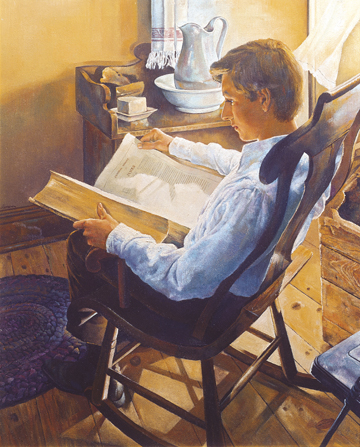
As a boy, Joseph Smith learned from his parents to trust the scriptures. He learned to read by them, studied them, and struggled to understand them better. When reading James 1:5-6, he learned to ask important questions with confidence that God would reveal to him the answers. By following those answers, Joseph was able to help his family find certainty in uncertain times.

The epitome of the power of the small and the simple is expressed by the essence of this Christmas season—By a babe long ago in a manger in Bethlehem. Watch how we may use his scriptures to make small and simple changes to our actions in order to bring more peace into the world.

(Or same video at mormonchannel.org link.)

Christ wants all of us to feel safe and secure, even when we have pains and troubles, big or small. I have learned for myself that he has given us the scriptures to guide us away from ideas that lead us to mistakes and regrets and towards peace and happiness, both for us and for those near and dear to us. From our family to yours, may you have the happiest and holiest of holidays.

——– End of Post ——–

Bonus Material:

1. Watch how a teenage competition through a maze is used as an analogy to show how the scriptures help us get through life. (Length: 10:02.)

2. Watch how this teacher encourages young men to search the scriptures. (Length: 1:41.)

——– End of Bonus Material ——– WebCredits—List of web resources used in this post but not explicitly credited above:

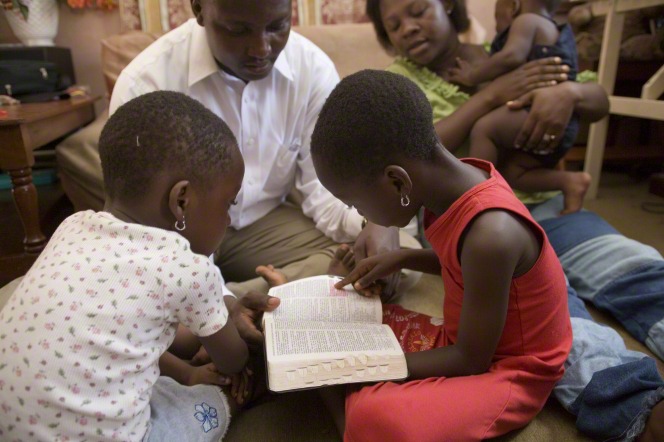
  • Photo, family scripture study—www. lds.org/media-library/images/scripture-study?lang=eng#family-scripture-study-208903
  • Video, “Words with Friends”—www. youtube.com/watch?v=IyMlkkkcbfs
  • Video, “Daily Bread: Pattern”—www. youtube.com/watch?v=2eMJ6ZDCAp4
  • Illustration, Joseph searching scriptures—www. lds.org/media-library/images/gospel-art/church-history?lang=eng&start=1&end=10#joseph-searching-scriptures-37717
  • Photo, snowflake ornament—www. lds.org/media-library/images/christmas?lang=eng&start=21&end=30#snowflake-ornament-130226
  • Video, “The Maze”—www. lds.org/media-library/video/2012-06-1030-the-maze?lang=eng
  • Video, “Searching the Scriptures”—www. lds.org/media-library/video/2013-03-002-searching-the-scriptures?lang=eng
  • Photo, lights in snow on Temple Square—www. lds.org/media-library/images/christmas?lang=eng&start=51&end=60#lights-temple-square-613721

——– End of WebCredits ——–
Women of Power, Women of Influence

Don't Be A DummyThis morning, I was struck by this thought-provoking sentence: “I don’t know one of [my own circle of girlfriends] who doesn’t have feelings of lingering discomfort regarding her own sexual past.” I read this in a footnote to a talk in a recent LDS General Conference interestingly titled, “The Moral Force of Women.”

The entire two-paragraph context by author Jennifer Moses is good:

So here we are, the feminist and postfeminist and postpill generation. We somehow survived our own teen and college years (except for those who didn’t), and now, with the exception of some Mormons, evangelicals and Orthodox Jews, scads of us don’t know how to teach our own sons and daughters not to give away their bodies so readily. We’re embarrassed, and we don’t want to be, God forbid, hypocrites.

Still, in my own circle of girlfriends, the desire to push back is strong. I don’t know one of them who doesn’t have feelings of lingering discomfort regarding her own sexual past. And not one woman I’ve ever asked about the subject has said that she wishes she’d “experimented” more.

Don't Short Change YourselfIn fact, the entire WSJ article is good, and not only because it stirred up a strident response. (See “Why Do We Let Them Dress Like That?”, Jennifer Moses, Wall Street Journal, 19 Mar 2011, Page C3). Here is a selection from the address that referenced Moses’ article:

[In the view of many in the world, in sharp contrast to God’s view,] there has long been a cultural double standard that expected women to be sexually circumspect while excusing male immorality. The unfairness of such a double standard is obvious, and it has been justifiably criticized and rejected. In that rejection, one would have hoped that men would rise to the higher, single standard, but just the opposite has occurred—women and girls are now encouraged to be as promiscuous as the double standard expected men to be. Where once women’s higher standards demanded commitment and responsibility from men, we now have sexual relations without conscience, fatherless families, and growing poverty. Equal-opportunity promiscuity simply robs women of their moral influence and degrades all of society. In this hollow bargain, it is men who are “liberated” and women and children who suffer most. (“The Moral Force of Women”, D. Todd Christofferson, LDS General Conference, Oct 2013. )

In his address, Christofferson also teaches us the importance of appreciating everyone’s influence for good, regardless of the ways they work all day: “A pernicious philosophy that undermines women’s moral influence is the devaluation of marriage and of motherhood and homemaking as a career. Some view homemaking with outright contempt, arguing that it demeans women and that the relentless demands of raising children are a form of exploitation. They ridicule what they call “the mommy track” as a career. This is not fair or right. We do not diminish the value of what women or men achieve in any worthy endeavor or career—we all benefit from those achievements—but we still recognize there is not a higher good than motherhood or fatherhood in marriage.”

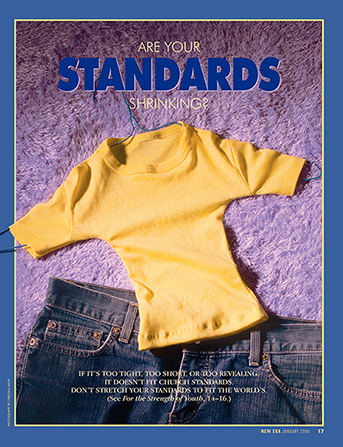
Are Your Standards ShrinkingIn a second footnote are cited important words from another address: “If being ‘selfless’ means a woman must give up her own inner identity and personal growth, that understanding of selflessness is wrong… But today’s liberationist model goes too far the other way, stereotyping women as excessively independent of their families. A more sensible view is that husbands and wives are interdependent with each other… The critics who moved mothers from dependence to independence skipped the fertile middle ground of interdependence. Those who moved mothers from selflessness to selfishness skipped the fertile middle ground of self-chosen service that contributes toward a woman’s personal growth. Because of these excesses, debates about the value of motherhood have, ironically, caused the general society to discount not only mothers but women in general.” (“Motherhood and the Moral Influence of Women”, Bruce C. Hafen, World Congress of Families II, Geneva, Switzerland, Plenary Session IV, 16 Nov 1999.)

Some may assume that these thoughts refer to virtue, to dressing modestly, or to the value of a working woman, rather than viewing them as a related whole. For me, the issue here is one of influence and of power. Women wield power and influence in diverse ways, and everyone should appreciate good work, independent of where a woman chooses to do it. I have learned for myself that, regardless of our views, it is selfish to say unkind things. We can learn to use our power and influence to build rather than to belittle, even if a person makes choices we would not make for ourselves. Women should not limit themselves to roles that others define for them. The far-reaching effects of the power and influence of women is well described in and certainly not limited to the why-do-we-let-our-kids-wear-immodest-clothes article by Jennifer Moses, Matt Walsh’s …Me?-Ha!-I-WORK! post, Sheri Dew’s two-are-better-than-one talk, or Julie Beck’s mothers-who-know address. “The world’s greatest champion of woman and womanhood is Jesus the Christ.” (Daughters in My Kingdom: The History and Work of Relief Society, Page 3.)

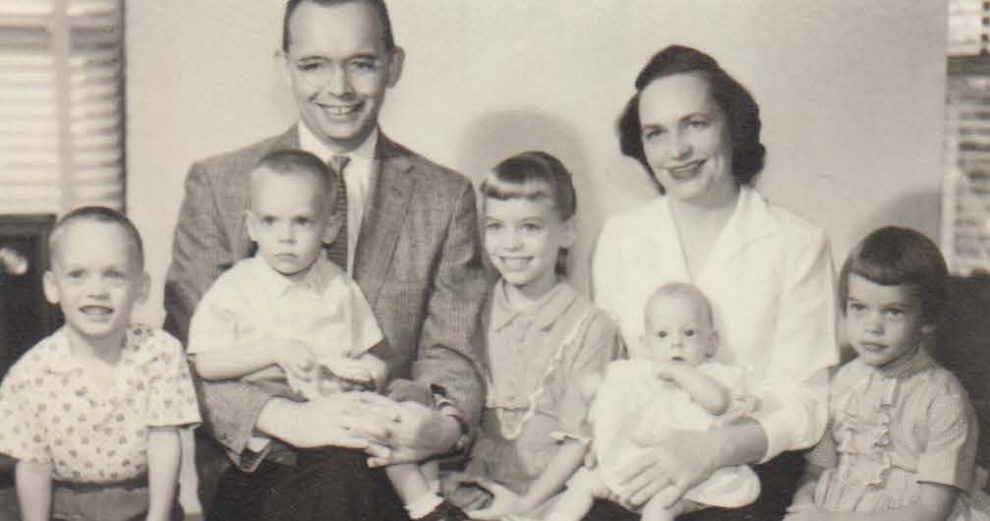
Early in her life, my wife nurtured a strong desire to be a woman of power and a woman of influence. She decided that she could do that most effectively by choosing to stay at home to raise a family. Her influence on our six adult children and on their families cannot be measured. That is influence; that is power. We are grateful for her wisdom to wield these skills in such a way as to have a true impact on society.

——– End of Post ——–

WebCredits—List of web resources used in this post but not explicitly credited above:

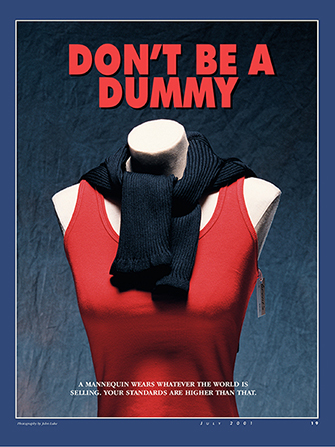
  • Poster, Don’t Be A Dummy: A mannequin wears whatever the world is selling. Your standards are higher than that.—www.lds.org/media-library/images/mormonads/dress-and-appearance?lang=eng#mormonad-dont-be-a-dummy-1118328 [Church standards of modesty apply equally to all genders.]
  • Poster, Don’t Short Change Yourself: The way you dress advertises your standards. Send the right message. (See For The Strength Of Youth, P. 8.)—www. lds.org/media-library/images/mormonads/dress-and-appearance?lang=eng#mormonad-short-change-1118313 [Church standards of modesty apply equally to all genders.]
  • Article, “Why Do We Let Them Dress Like That?”, Jennifer Moses, Wall Street Journal, 19 Mar 2011—online.wsj.com/news/articles/SB10001424052748703899704576204580623018562
  • Address, “The Moral Force of Women,” D. Todd Christofferson, LDS General Conference, Oct 2013—www. lds.org/general-conference/2013/10/the-moral-force-of-women?lang=eng
  • Poster, Are Your Standards Shrinking? If it’s too tight, too short, or too revealing, it doesn’t fit church standards. Don’t stretch your standards to fit the world’s. (See For The Strength Of Youth, P. 14-16.)—www. lds.org/media-library/images/mormonads/dress-and-appearance?lang=eng#mormonad-standards-shrinking-1118383 [Church standards of modesty apply equally to all genders.]
  • Address, “Motherhood and the Moral Influence of Women,” Bruce C. Hafen, World Congress of Families II, Geneva, Switzerland, Plenary Session IV, 16 Nov 1999 —worldcongress.org/wcf2_spkrs/wcf2_hafen.htm
  • Blog Post, “You’re a stay-at-home mom? What do you DO all day?”, Matt Walsh—themattwalshblog.com/2013/10/09/youre-a-stay-at-home-mom-what-do-you-do-all-day/
  • Address, “It Is Not Good for Man or Woman to Be Alone”, Sheri L. Dew, LDS General Conference, Oct 2001—www. lds.org/general-conference/2001/10/it-is-not-good-for-man-or-woman-to-be-alone?lang=eng
  • Address, “Mothers Who Know”, Julie B. Beck, LDS General Conference, Oct 2007—www. lds.org/general-conference/2007/10/mothers-who-know?lang=eng
  • Book, Daughters in My Kingdom: The History and Work of Relief Society (2011, Intellectual Reserve, Inc., United States of America)—www. lds.org/relief-society/?lang=eng

——– End of WebCredits ——–

Being Brave: Pre-mortality, Priesthood Power, and the Family Proclamation

A friend just shared this Vocal Point video with me, and an entire post popped in my head. The song is “(I Want To See You Be) Brave,” by Sara Bareilles. I thought of my wife, Kim, of our six adult kids and their families. I especially liked the sign that reads, “When I talk to new people.”

As a Mormon, as a member of The Church of Jesus Christ of Latter-day Saints, I  believe that we lived with God before we were born. True of anyone. And by celestial design, none of us remember — It was all veiled at birth. For eons before we came here, we studied hard, acquired knowledge, and learned skills, all with the goal of trying our guts out to live as God had taught and to do whatever we could to keep ourselves and others on the narrow path back to him. As we prepared with him for the moment of our birth, we knew that we would learn more from life on earth, because here we would be able to learn to walk not by memory, not by sight, but by faith, for the first time making decisions on our own in an environment where Heavenly Father was no longer around. As he sent us off, I wonder if he was singing to us a similar pre-lullaby message of “I want to see you be brave!”

This idea of a pre-existence changes many a perspective. I see my body not as mine, not to do with as I please, but as a temple of God, a gift from him, a house for my spirit now that I’m no longer with him. Such a view demands that I treat my body with respect and not with selfishness. The idea of a pre-mortal life and the idea of your body being a temple and not your own are ideas that permeate the popular post of Mormon blogger Seth Adam Smith, “Marriage Isn’t For You” (at his blog or at Huffington Post). His earthly father taught him, “Marriage isn’t for you. It’s not about you. Marriage is about the person you married.” While I heartily agree, I also counsel our kids as they head to the altar that marriage is so dang fun (for themselves as well as for their spouse).

These ideas and others are discussed concisely in the LDS Family Proclamation. These ideas help protect me, keep me be safe and secure. These perspectives, these teachings, are why families are so important. Families help us get ourselves back to God.

And in addition to giving us a family to help, God went further to give us another gift, both urgent and important. He allowed us to have a portion of his power. He gave us his priesthood, the authority to act for him, to do what he would do, if he were here with his ample arm around us, whispering what he would like us to know, to do, to be, to become. The priesthood of God isn’t for some and not for others — It’s for any of us, for all of us. It applies equally to people of any gender, in any country, of any position in life. For example, watch how Sheri Dew answers the great question: “In the Church of Jesus Christ of Latter-day Saints, what do women get?”

http://www.youtube.com/watch?v=-QYlDLChzig

I can see how God sent ALL of us here well prepared, not just to thrive, but to fight to find our way back. When we’re unsure of the path, he continues to guide us. We call that prayer, and it works like a phone. With a bit of effort, it’s a two-way communication device. Beats a cell phone or Star Trek communicator with a stick.

Dieter Uchtdorf taught us to be brave against doubt when he said, referring to another’s phrase which was first penned in 1924: “It’s natural to have questions—the acorn of honest inquiry has often sprouted and matured into a great oak of understanding. One of the purposes of the Church is to nurture and cultivate the seed of faith—even in the sometimes sandy soil of doubt and uncertainty. Therefore, my dear brothers and sisters—my dear friends—please, first doubt your doubts before you doubt your faith.” (See F.F. Bosworth, Christ the Healer (1924), Page 23, as quoted in “Come, Join With Us”.)

Most importantly, these perspectives shift my thinking, so that I tend to view life through a lens of patience and peace. These ideas give me hope and humility. Seth’s dad is spot on — It isn’t all about me. Sometimes, I don’t want my stinkin’ thinkin’ shifted, but if I learn to adjust my vision to a more godly perspective, I realize that it was short-sighted to fight the shift in thought. I hope it makes me a better husband, a better father, a better man, a better person. It helps me be brave.

From the lyrics of Brave: “Show me how big your brave is.”

Seeing Ourselves As Brave -- Being Brave For Others

Seeing Ourselves As Brave — Being Brave For Others

——– End of Post ——–
WebCredits—List of web resources used in this post but not explicitly credited above:

  • Video, “Brave by Sara Bareilles—BYU Vocal Point (a cappella tribute)”—www. youtube.com/watch?v=XeX3r8j66Qk
  • Blog Post, “Marriage Isn’t For You”, Seth Adam Smith—sethadamsmith.com/2013/11/02/marriage-isnt-for-you/
  • Blog Re-post, “Marriage Isn’t For You”, Seth Adam Smith—
    www. huffingtonpost.com/seth-adam-smith/marriage-isnt-for-you_b_4209837.html
  • Document, The Family: A Proclamation to the World
    www. lds.org/topics/family-proclamation
  • Video, “Lean on My Ample Arm”—www. youtube.com/watch?v=iWn48w7vX80
  • Hymn, “Lean on My Ample Arm”, music, recordings, lyrics—www. lds.org/music/library/hymns/lean-on-my-ample-arm?lang=eng
  • Video, “What Do LDS Women Get?”—www. youtube.com/watch?v=-QYlDLChzig
  • Address, “Come, Join With Us,” Dieter F. Uchtdorf, LDS General Conference Oct 2013—www. lds.org/general-conference/2013/10/come-join-with-us
  • Illustration, Seeing Ourselves As Brave — Being Brave For Others—https://www. lds.org/media-library/images/primary/illustrations?lang=eng#children-barking-dog-778662

——– End of WebCredits ——–

Manage Unwanted Door-knocking? Our Family’s Answer.

ocean-woman-morning-fog-at-big-sur

Reader Question:
I have a problem with Mormon missionaries coming to our door! They have sent three sets of people three times in the last week, and I cannot get them to understand that we are not interested in becoming Mormon! I don’t want to be rude or disrespectful to another person’s religion, but I can’t seem to get the point across! A simple “No, thank you” has not done the trick! What can I tell them to get them to stop coming back? It is the church in my town in Oklahoma, I know this is not directly related to this page. I came to this page through a friend’s facebook page! I am Catholic and do not wish to become Mormon nor does anyone in my family. I understand your message and beliefs but I cannot get the missionaries to stop coming to the door! Can you please offer me advice to get this to stop? I am sure this is not what you had in mind for questions on this page, but I am getting a little desperate here. I am not trying to be disrespectful to these missionaries, but I am not interested, and they do not seem to understand that! Thank you for your time and consideration, and I apologize if you have found this offensive, that is really the last thing I have intended!

Family Answer:
Thanks for your question. Sincere, honest questions are always a good thing.

To gather an answer to your question, we talked to our adult kids. We also asked our local missionaries, because we knew they could help us. The answer from our local elders was the same as from our family: Next time your local missionaries come to your door, be kind, be honest, and be direct. Explain to them that you are simply not interested and ask that they keep track of your request not to return to your address.

Also, understand that these are young men and women who at their own expense have left their families and friends to serve for up to two years. The elders in your area and missionaries around the globe are here to help strengthen others, and they do that in the best way they can, and sometimes they make mistakes and flub up. Watch for a typical day in their life. One young woman said (at Time 2:28 of “Women Called to Serve”), “Our purpose is not to shove our beliefs down other people’s throats and make them do things they don’t want to do, but it’s to invite them to come unto Christ and to strengthen, not to change the faith that they have, but to strengthen that faith.” A young man from England serving in New York (“Men Called to Serve,” Time 5:33) said, “Sometimes you walk down the street as a missionary, and you grow such a love for these people, and there are some people who, you know, they mock you, or they laugh at you, or they simply don’t want to talk to you. I think one of the hardest things about a mission is that you believe in something so much, and then others don’t seem to trust you or give you a chance. That’s pretty hard.”

I hope this answers your question and helps you understand us better and how to talk more effectively to Mormon missionaries wherever you find them.

And let us know how we may help you further! If you find that you have any questions about religious issues that you’ve been wondering about or that you haven’t been able to get good answers to, feel free to continue on discussion with us. It turns out that there are a lot of people with questions, and most of them have given up on churches as a source of answers. In our family, it is our experience that answers are out there, that God wants us to have them, and that they tend to be answers we like and have learned to appreciate. Working together with Heavenly Father allows anyone to find certainty in uncertain times.

-Dave and the MormonPanorama Family

ocean-double-rainbow

——– End of Post ——–
WebCredits—List of web resources used in this post but not explicitly credited above:

  • Photo, ocean-woman-morning-fog-at-big-sur—www.lds.org/media-library/images/oceans?lang=eng&start=21&end=30
  • Address, “Ask the Missionaries! They Can Help You!”, Elder Russell M. Nelson, LDS General Conference, Oct 2012—www .lds.org/general-conference/2012/10/ask-the-missionaries-they-can-help-you?lang=eng
  • Photo, ocean-double-rainbow—www.lds.org/media-library/images/oceans?lang=eng#double-rainbow-760414

——– End of WebCredits ——–

Prayer And Getting Out Of Our Comfort Zone

Knock, And It Shall Be Opened Unto You

Knock, And It Shall Be Opened Unto You

To include prayer in our lives is to invite sacred moments into our lives. Watch the video Earthly Father, Heavenly Father:

(Or same video at lds.org link.)

I love the words of the narrator as we focus on his wedding ring at Time 2:53 and the kid at the door watching his parents pray at 2:34. When I walked in to see my own parents at prayer, I remember the whoosh of feelings of safety and security but mostly of sacredness.

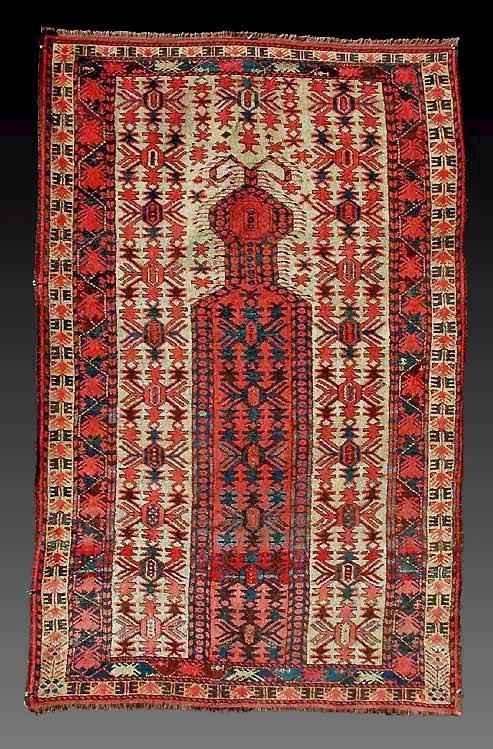
My favorite memory of the power of a prayerful life is one at work. I knocked on a friend’s office door; normally, he responds quickly with, “Come in!”, and I open the door. Sometimes, I’ll hear water running in the office bathroom as he makes ablution, and I know not to knock at the door for a few minutes after he returns to his office. But this day I was distracted and failed to notice that my knock at the door from without brought no invitation voiced from within. Out of habit, I called him by name, adding the customary honorific suffix, and opened the door. I found my elderly friend kneeling lowly on his prayer rug. It was such a holy moment. In a familiar whoosh of feeling, I was aware that I had missed the cues of the sounds at the sink. Having cleansed himself without as he focused on cleansing himself within, he was now talking with his Maker, expressing humility without as he voiced humility within. It was just like walking in on my parents at prayer. After prayers were done, we embraced; I apologized for disturbing a sacred moment. “Oh, I don’t mind. I am just doing my duty,” he said. I replied, “It is the duty of us all.”

When I think of my favorite moments of prayer, I will always see in my mind and in my heart an elderly man from Uzbekistan, with shoes removed from off his feet, kneeling submissively on sacred ground in his office, visible to none but to Him who sees all.

I shall be telling this with a sigh
Somewhere ages and ages hence:
Two roads diverged in a wood, and I,
I took the one less traveled by,
And that has made all the difference.
-Robert Frost

Vintage Prayer Rug

Vintage Prayer Rug

——– End of Post ——–
WebCredits—List of web resources used in this post but not explicitly credited above:

  • Photo, “Knock, And It Shall Be Opened Unto You”—westsoundmodern.wordpress.com/2011/05/11/go-away-im-washing-my-hair-2/knock-knock-3/
  • Video, “Earthly Father, Heavenly Father”—www. youtube.com/watch?v=R5FxdCgD-qI
  • Photo, “Vintage Prayer Rug”—www .persiancarpetguide.com/sw-asia/Rugs/Turkmen/Arsary/Arsary94.htm
  • Photo, young-man-kneeling-in-prayer-from-Chap 5-ETBenson-manual—www .lds.org/manual/teachings-of-presidents-of-the-church-ezra-taft-benson/chapter-5-principles-of-true-repentance?lang=eng

——– End of WebCredits ——–

young-man-kneeling-in-prayer-from-Chap 5-ETBenson-manual target=