Tag Archives: Progression

Callings: Murmur or Magnify?

What’s a “calling” mean to you?

We’re Responsible To Know For Ourselves

We’re Responsible To Know For Ourselves

As a Mormon, to me it means accepting an assignment from church leaders to serve others. I know my leaders have pondered and discussed and prayed before asking me to serve. After saying Yes, I have the responsibility to kneel and to find out for myself that such a calling is from God. Because I belong to The Church of Jesus Christ of Latter-day Saints, I want to magnify my calling.

Magnifying my calling is less concerned with what I do as I serve others and more concerned with how or why I serve others.

Conducting Music At Church

Conducting Music At Church

For example, I had a friend in college who moved into our congregation and immediately accepted a calling to lead the music in church each Sunday. Kathy was a recent convert to the Church of Jesus Christ, and she felt the calling was inspired of God. She gathered her roommates around her, told them of the new calling, and explained that she was terrified, as she had no musical experience whatsoever. They rallied around her, practiced singing and leading hymns in their living room over and over and over, for weeks on end, until she was comfortable directing the congregational music on her own.

I remember that first Sunday when Kathy stood before the congregation. Her fear was clear in every movement. With her hands, she deftly directed a perfect 3/4 meter in a little tiny triangular pattern, moving her hands about four inches from top of pattern to bottom. Her roommates ran up to her afterwards and all gave her a big hug. Weeks later, in our next testimony meeting, Kathy bore witness to how she had grown by accepting this calling and how she felt it was inspired of God. Then, the member of the bishopric who had issued the calling to her stood to explain that congregation leaders had been misinformed about her musical experience, were surprised to discover otherwise, and were pleased by Kathy’s willingness to serve in any capacity and by her roommates’ willingness to assist. As Kathy’s musical confidence grew over the next few months, the pattern of her musical direction grew to a more normal size. During those months, I remember seeing some of her roommates with tears streaming down their smiling faces as they watched Kathy’s trembling hands. We all watched as Kathy’s face smiled more and as her countenance glowed more each week as she stood before us. This calling had little to do with the knowledge of man and much to do with the knowledge of God. Kathy’s willingness to submit and to say Yes, to take initiative to educate herself, to learn new skills outside of her comfort zone, inspired us all.

Again, callings are less concerned with what we do as we serve others and more concerned with how or why we serve others. Kathy is proof. I’m glad there are so many Kathy’s in the world.

Having Learned For Ourselves, We’re Responsible To Help Others Know

Having Learned For Ourselves, We’re Responsible To Help Others Know

——– End of Post ——–

Bonus Material:

1. Watch, listen, or read Elder Dallin H. Oaks as he speaks to the general membership of the Church as one of the twelve apostles of the Lord Jesus Christ in his address, entitled “Why Do We Serve?” (Length: 19:47.)

2. Watch, listen, or read the address of Elder M. Russell Ballard on showing our love and appreciation for the Savior’s atoning sacrifice through our simple, compassionate acts of service, entitled “Finding Joy through Loving Service.” (Length: 15:03.)

3. Watch, listen, or read Elder Derek A. Cuthbert in his beloved address, entitled “The Spirituality of Service.” (Length: 9:35.) It was a landmark address, quoted for years afterwards, particularly: “Over the years, many people, especially youth, have asked me, ‘Elder Cuthbert, how can I become more spiritual?’ My reply has always been the same: ‘You need to give more service.’ ”

4. Watch, listen, or read the wonderfully inspired words of President Barbara B. Smith, entitled “She Stretcheth Out Her Hand to the Poor.” (Length: 9:54.)

5. Watch, listen, or read President Thomas S. Monson as he describes, “The Service That Counts.” (Length: 22:26.)

6. Watch, listen, or read the address of Elder Dallin H. Oaks on how our Savior teaches us to follow Him by making the sacrifices necessary to lose ourselves in unselfish service to others, entitled “Unselfish Service.” (Length: 17:19.)

——– End of Bonus Material ——–

WebCredits—List of web resources used in this post but not explicitly credited above:

  • Photo, “We’re Responsible To Know For Ourselves”—www. lds.org/media-library/images/prayer?lang=eng
  • Photo, “Conducting Music At Church”—www. lds.org/media-library/images/music?lang=eng
  • Photo, “Having Learned For Ourselves, We’re Responsible To Help Others Know”—www. lds.org/media-library/images/education/spiritual?lang=eng
  • Photo, “Studying To Learn”—www. lds.org/media-library/images/education/miscellaneous?lang=eng

——– End of WebCredits ——–

Studying To Learn

Studying To Learn

Cleaning Maintenance, And Why A Spider Made Me Lie

Ever wish you could erase a mistake and start anew? I make mistakes all the time. Even after my baptism at eight years old, when I promised always to choose the right, I found I still made mistakes. Like when I lied.

Big Spider In Garden

Big Spider In Garden

Yes, I know. Rare raw-force exceptions aside, in general, nothing can make you do anything without your consent. So the spider didn’t make me lie. I lied and blamed the spider. You see, my blood freezes when I see spiders. I talked to my mom about it when I was a teenager, and she said that it was probably because I always saw her screaming and running from the room whenever she saw one. Hmmm, tempting—Blame the parent. Regardless of why my blood freezes, it was indeed why I decided only to pick ten strawberries and call the job done. My family assignment that day when I was nine years old was to pick a couple of pints of berries. Not hard, since we lived on a 23-acre farm in Missouri, where anything grows and grows big in the fertile Missouri mud, and where, right between the barn and the row of peach trees, we had a large strawberry patch of about an acre. Not hard at all, since there were strawberries all summer long, year after year.

Large Strawberry Patch

Large Strawberry Patch

I had picked ten berries when I saw the spider. As usual, I froze. Why is it I can’t take my eyes off a spider whenever I see one? After about twenty minutes of spider-watching-Dave and Dave-watching-spider, neither of us trusting the other much, I re-entered the farmhouse, gave my mom the ten berries, and that’s when it happened. I lied. I explained that I couldn’t find any more berries. That seemed to work…until Dad got home. By then, it was storming outside, thick Missouri rain, and Dad clearly anticipated berries with whatever we had for dinner. I didn’t see him home until he returned to the house, soaked to the skin, with about three pints of berries in his hands. Oh, and he was screaming. “No strawberries? Does this look to you like no strawberries?” (Translation: “You idiot! Why couldn’t you find these in the sun, and why did I have to find them in the rain???”) I burst into tears, told him about the big spider, how it scared the heck out of me, and I just couldn’t go any further into the patch. What if I had found more spiders?!? I must really have sounded terrified, which I was, both of Dad and of the spider on his strawberry throne, because Dad stopped what he was doing, and gave me a big hug. He was probably thinking, “You’re nine, and you’re still scared of spiders?”, but he hugged me all the same. Maybe it was because I was sobbing so hard. Or maybe it was the raw fear with which I was eyeing the three pints of berries.

I did eventually stop sobbing and grow up. When I was twelve and on one of my first overnight campouts, my brother stuck a garter snake in my face, and I said how cute it looked and asked to hold it. Since it failed to scare me, my brother was so mad that he refused to let me have the snake. I had to find my own slithering friend.

But this isn’t a post about berries or spiders or snakes. It’s not specifically about lying. It’s about making mistakes in general. And the clean-up in the aftermath.

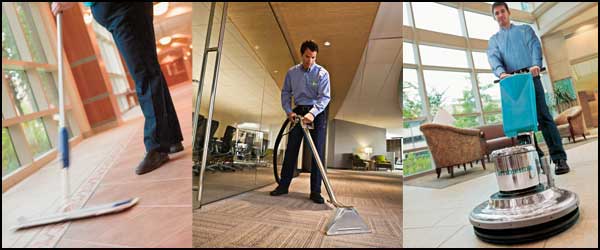
Cleaning Maintenance

Cleaning Maintenance

Since the idea of “Forever Clean” was a bust, due to our propensity for serial sinning, we needed a way to accommodate the “Forever Cleansing” thing described in my previous post. God knew that, and He knows us, so He provided the means to erase the board every week, even when we make mistakes. He gave us the Holy Sacrament (communion, eucharist). By celestial design, the intent of the bread and wine (or for Mormons, the bread and water) is much more than mere symbols of the body and blood of Christ. It reminds us of our promises we made at baptism, to live His ways and always to remember Him. By celestial design, the intent goes way beyond the once-a-week symbols, helping us remember to follow Him in our heart and mind throughout each day wherever we happen to be and not limited to our thoughts in a holy place just on Sundays.

The Sacrament covers cleaning maintenance even when we make mistakes over and over. It’s not just for something I do just once and then decide not to do again, such lying or stealing. If I set myself on a new path of obedience, I can use it each week to stay clean from any kind of sin. I can use it if I get angry with a co-worker, overeat, or become lazy about service to others around me and not serving a friend as I should. Just as did my dad’s hug when I lied, the Sacrament helps me feel good about putting my mistakes behind me. I set aside the world. I enter instead a world bathed in light.

The Holy Sacrament helps me repent and cleanse the past. It helps me to stay clean.

Erasing The Slate; Starting Again With A Clean Slate

Erasing The Slate; Starting Again With A Clean Slate

——– End of Post ——–

Bonus Material:

1. Watch, listen, or read Elder L. Tom Perry’s address discussing how partaking of the sacrament provides us with a sacred moment in a holy place, entitled, “As Now We Take the Sacrament”. (Length: 16:45.)

2. Watch, listen, or read the address of Elder Dallin H. Oaks on how the ordinance of the sacrament makes the sacrament meeting the most sacred and important meeting in the Church, entitled, “Sacrament Meeting and the Sacrament”. (Length: 16:17.)

——– End of Bonus Material ——–

WebCredits—List of web resources used in this post but not explicitly credited above:

  • Photo, “Big Spider In Garden”—www. donrelyea.com/blog/tag/spider/sermonview.com/cart/product_info.php?products_id=5321
  • Photo, “Large Strawberry Patch”—amandasteenphoto.com/2012/07/27/strawberry-fields-forever/
  • Photo, “Cleaning Maintenance”—www.cleanmyfacility.com/carpet-hard-surface-floor-cleaning-commercial.html
  • Photo, “Erasing The Slate; Starting Again With A Clean Slate”—lifeatthirtysomething.com/2014/01/a-new-year-a-clean-slate-operation-lose-the-baby-weight-find-my-brain-etc-begins-now/
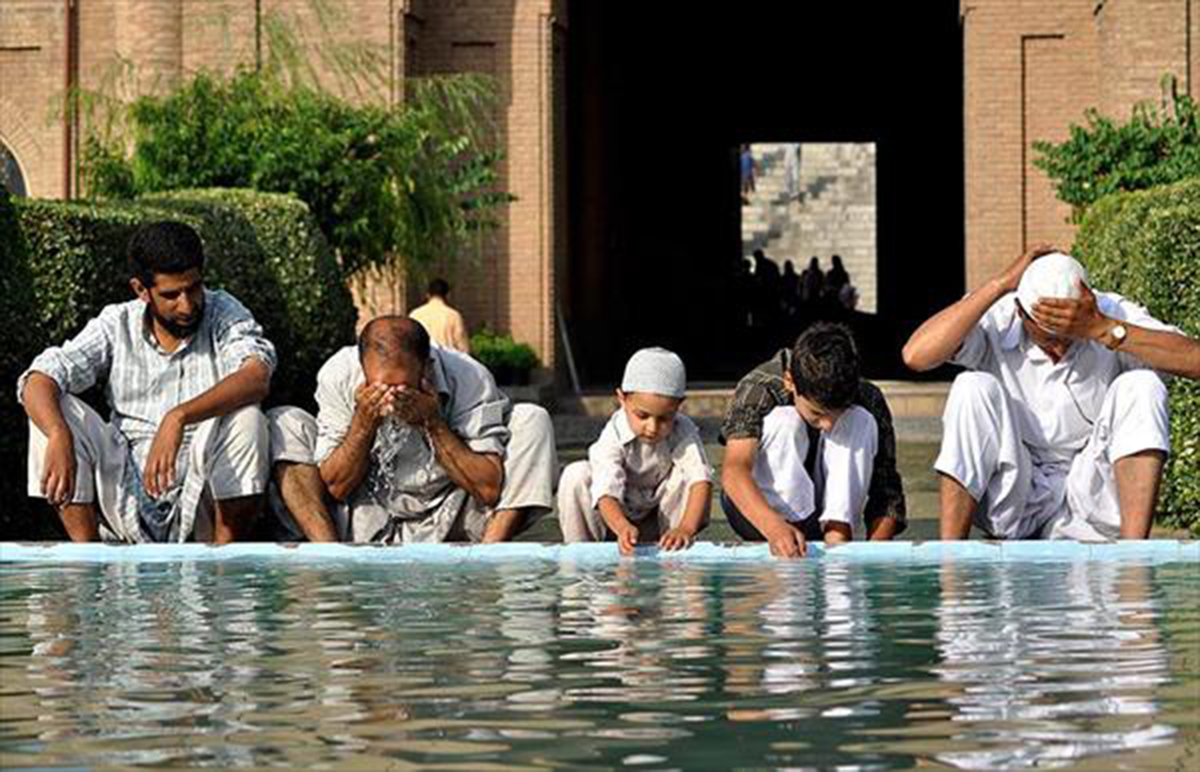
  • Photo, “Making Ablution With Friends”, photo by: Masood Bhat/Kashmir Headlines—kashmirheadlines.in/kashheadlines/11222013-ND-getting-ready-for-prayersa-group-of-people-making-ablution-to-perform-prayers-in-historic-jamia-masjid-srinagar-photo-by-masood-bhat-kashmir-headlines-3452.aspx

——– End of WebCredits ——–

Reasons to make ablution, to make wudu (http://en.wikipedia.org/wiki/Wudu):

(Source of list of reasons:
Described with beauty and grace at http://ahsanjaved.tumblr.com/)

Providing a sacred moment in a holy place:

Making Ablution With Friends

Making Ablution With Friends

Forever Clean: Asking For And Receiving Help

Seminary Teacher Laughs With His Class Of High School Students

Seminary Teacher Laughs With His Class Of High School Students

Growing up as a Latter-day Saint youth, I had lots of infrastructure to help me stay clean. Much of that had to do with learning to receive help from the spirit of God, learning to receive the Holy Ghost. From 9th to 12th Grade, I had lots of friends through opportunities in  education that I found in Seminary, a before-school Bible study class where they encourage lots of questioning and lots of peppered discussions. It was high school, and we were feeling our way in life. While others around us complained, whenever life’s worries got us down, we found friends, hugs, empathy, shared tears, and hearts that listened. All this infrastructure was strengthened by lessons we taught ourselves on our own initiative by learning to receive the Holy Ghost.

Seminary Student Participates In Class

Seminary Student Participates In Class

Not limited to youth, such lessons are ones I continually learn yet again as an adult. In my previous post, I shared an experience with a suicidal friend who had just lost his entire family in an accident, who soon changed and was able to seek on his own the further help that he needed. As I see it, the help that I received and the help that he received was because we were learning to receive the Holy Ghost.

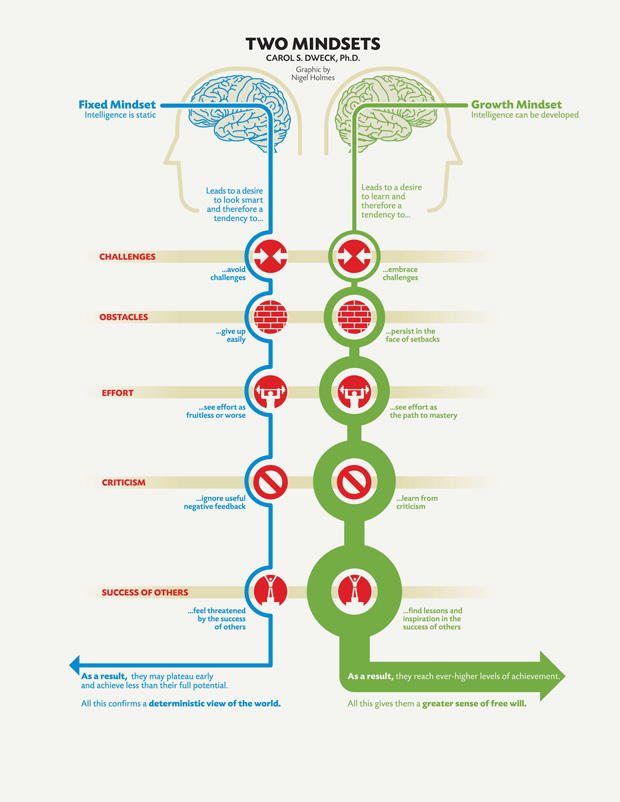
Two Mindsets, Carol S. Dweck, Ph.D., Growth Mindset v. Fixed Mindset

Two Mindsets, Carol S. Dweck, Ph.D., Growth Mindset v. Fixed Mindset

Have you ever felt that your life was in the toilet? I know I have. Might you know someone who has hit rock bottom? I find the WAY OUT when I understand a need to change myself, to see myself as God sees me. That’s called repentance. I submit that the WAY OUT, wherever we find it, is always lit by God. We find it when we learn to receive the Holy Ghost. In psychological or sociological terms, here’s a great graphic, brought to us by Carol S. Dweck, Ph.D. She describes two mindsets, a fixed mindset and a growth mindset. I have learned that I find a WAY OUT when I choose a growth mindset.

Missouri Sunrise Over Ozark Mountain Country

Missouri Sunrise Over Ozark Mountain Country

Throughout my life and through my own baptism in Missouri when I was eight years old, I’ve learned that baptism is a covenant, a two-way promise; we promise certain things to God, and He promises certain things to us. We promise to live His ways, to follow and remember Him; remembering brings us to asking Him for help. He promises to send us His Spirit if we remember Him. Baptism has two essential parts: By water and by fire (by the Spirit).

But why baptize? Why on earth should God teach us to be baptized? Joseph Smith taught: “You might as well baptize a bag of sand as a man, if not done in view of the remission of sins and getting of the Holy Ghost. Baptism by water is but half a baptism, and is good for nothing without the other half—that is, the baptism of the Holy Ghost.” (Teachings of the Prophet Joseph Smith, Page 314.) David Bednar explains the tools of the Holy Spirit, how He works: “The influence of the Holy Ghost is described in the scriptures as ‘a still small voice’ and a ‘voice of perfect mildness’.”

My conclusion: “Forever clean” doesn’t exist. Along the way, I make lots of mistakes. We all do. The good news is that “Forever cleansing” is alive and well. The Holy Ghost helps us get back on track. By celestial design, that’s His job. I’ll be forever glad that He does it well.

Cleansing Hands

Cleansing Hands

——– End of Post ——–

Bonus Material:

Watch, listen, or read Elder David A. Bednar’s entire address regarding overcoming both sin and the desire to sin, both the taint and the tyranny of sin, entitled, “Clean Hands and a Pure Heart”. (Length: 14:33.)

——– End of Bonus Material ——–

WebCredits—List of web resources used in this post but not explicitly credited above:

  • Photo, “Seminary Teacher Laughs With His Class Of High School Students”—www. lds.org/church/news/parents-can-now-register-students-for-seminary-online?cid=HPTH012314379&im=true&lang=eng
  • Photo, “Seminary Student Participates In Class”—www. lds.org/church/news/parents-can-now-register-students-for-seminary-online?cid=HPTH012314379&im=true&lang=eng
  • Illustration, “Two Mindsets, Carol S. Dweck, Ph.D., Growth Mindset v. Fixed Mindset”—alumni.stanford.edu/content/magazine/artfiles/dweck_2007_2.pdf, from web article—alumni.stanford.edu/get/page/magazine/article/?article_id=32124
  • Photo, “Missouri Sunrise Over Ozark Mountain Country”—thepanoramapoint.wordpress.com/category/missouri/
  • Photo, “Cleansing Hands”—yankeecandleblog.wordpress.com/
  • Photo, “Bathing In The Ganges River To Cleanse Sins”—www. annbrooksphotography.com/blog/?p=1290

——– End of WebCredits ——–

Bathing In The Ganges River To Cleanse Sins

Bathing In The Ganges River To Cleanse Sins

Women of Power, Women of Influence

Don't Be A DummyThis morning, I was struck by this thought-provoking sentence: “I don’t know one of [my own circle of girlfriends] who doesn’t have feelings of lingering discomfort regarding her own sexual past.” I read this in a footnote to a talk in a recent LDS General Conference interestingly titled, “The Moral Force of Women.”

The entire two-paragraph context by author Jennifer Moses is good:

So here we are, the feminist and postfeminist and postpill generation. We somehow survived our own teen and college years (except for those who didn’t), and now, with the exception of some Mormons, evangelicals and Orthodox Jews, scads of us don’t know how to teach our own sons and daughters not to give away their bodies so readily. We’re embarrassed, and we don’t want to be, God forbid, hypocrites.

Still, in my own circle of girlfriends, the desire to push back is strong. I don’t know one of them who doesn’t have feelings of lingering discomfort regarding her own sexual past. And not one woman I’ve ever asked about the subject has said that she wishes she’d “experimented” more.

Don't Short Change YourselfIn fact, the entire WSJ article is good, and not only because it stirred up a strident response. (See “Why Do We Let Them Dress Like That?”, Jennifer Moses, Wall Street Journal, 19 Mar 2011, Page C3). Here is a selection from the address that referenced Moses’ article:

[In the view of many in the world, in sharp contrast to God’s view,] there has long been a cultural double standard that expected women to be sexually circumspect while excusing male immorality. The unfairness of such a double standard is obvious, and it has been justifiably criticized and rejected. In that rejection, one would have hoped that men would rise to the higher, single standard, but just the opposite has occurred—women and girls are now encouraged to be as promiscuous as the double standard expected men to be. Where once women’s higher standards demanded commitment and responsibility from men, we now have sexual relations without conscience, fatherless families, and growing poverty. Equal-opportunity promiscuity simply robs women of their moral influence and degrades all of society. In this hollow bargain, it is men who are “liberated” and women and children who suffer most. (“The Moral Force of Women”, D. Todd Christofferson, LDS General Conference, Oct 2013. )

In his address, Christofferson also teaches us the importance of appreciating everyone’s influence for good, regardless of the ways they work all day: “A pernicious philosophy that undermines women’s moral influence is the devaluation of marriage and of motherhood and homemaking as a career. Some view homemaking with outright contempt, arguing that it demeans women and that the relentless demands of raising children are a form of exploitation. They ridicule what they call “the mommy track” as a career. This is not fair or right. We do not diminish the value of what women or men achieve in any worthy endeavor or career—we all benefit from those achievements—but we still recognize there is not a higher good than motherhood or fatherhood in marriage.”

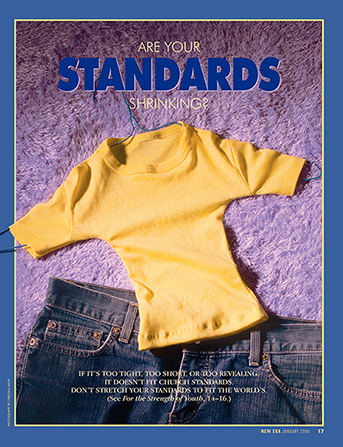
Are Your Standards ShrinkingIn a second footnote are cited important words from another address: “If being ‘selfless’ means a woman must give up her own inner identity and personal growth, that understanding of selflessness is wrong… But today’s liberationist model goes too far the other way, stereotyping women as excessively independent of their families. A more sensible view is that husbands and wives are interdependent with each other… The critics who moved mothers from dependence to independence skipped the fertile middle ground of interdependence. Those who moved mothers from selflessness to selfishness skipped the fertile middle ground of self-chosen service that contributes toward a woman’s personal growth. Because of these excesses, debates about the value of motherhood have, ironically, caused the general society to discount not only mothers but women in general.” (“Motherhood and the Moral Influence of Women”, Bruce C. Hafen, World Congress of Families II, Geneva, Switzerland, Plenary Session IV, 16 Nov 1999.)

Some may assume that these thoughts refer to virtue, to dressing modestly, or to the value of a working woman, rather than viewing them as a related whole. For me, the issue here is one of influence and of power. Women wield power and influence in diverse ways, and everyone should appreciate good work, independent of where a woman chooses to do it. I have learned for myself that, regardless of our views, it is selfish to say unkind things. We can learn to use our power and influence to build rather than to belittle, even if a person makes choices we would not make for ourselves. Women should not limit themselves to roles that others define for them. The far-reaching effects of the power and influence of women is well described in and certainly not limited to the why-do-we-let-our-kids-wear-immodest-clothes article by Jennifer Moses, Matt Walsh’s …Me?-Ha!-I-WORK! post, Sheri Dew’s two-are-better-than-one talk, or Julie Beck’s mothers-who-know address. “The world’s greatest champion of woman and womanhood is Jesus the Christ.” (Daughters in My Kingdom: The History and Work of Relief Society, Page 3.)

Early in her life, my wife nurtured a strong desire to be a woman of power and a woman of influence. She decided that she could do that most effectively by choosing to stay at home to raise a family. Her influence on our six adult children and on their families cannot be measured. That is influence; that is power. We are grateful for her wisdom to wield these skills in such a way as to have a true impact on society.

——– End of Post ——–

WebCredits—List of web resources used in this post but not explicitly credited above:

  • Poster, Don’t Be A Dummy: A mannequin wears whatever the world is selling. Your standards are higher than that.—www.lds.org/media-library/images/mormonads/dress-and-appearance?lang=eng#mormonad-dont-be-a-dummy-1118328 [Church standards of modesty apply equally to all genders.]
  • Poster, Don’t Short Change Yourself: The way you dress advertises your standards. Send the right message. (See For The Strength Of Youth, P. 8.)—www. lds.org/media-library/images/mormonads/dress-and-appearance?lang=eng#mormonad-short-change-1118313 [Church standards of modesty apply equally to all genders.]
  • Article, “Why Do We Let Them Dress Like That?”, Jennifer Moses, Wall Street Journal, 19 Mar 2011—online.wsj.com/news/articles/SB10001424052748703899704576204580623018562
  • Address, “The Moral Force of Women,” D. Todd Christofferson, LDS General Conference, Oct 2013—www. lds.org/general-conference/2013/10/the-moral-force-of-women?lang=eng
  • Poster, Are Your Standards Shrinking? If it’s too tight, too short, or too revealing, it doesn’t fit church standards. Don’t stretch your standards to fit the world’s. (See For The Strength Of Youth, P. 14-16.)—www. lds.org/media-library/images/mormonads/dress-and-appearance?lang=eng#mormonad-standards-shrinking-1118383 [Church standards of modesty apply equally to all genders.]
  • Address, “Motherhood and the Moral Influence of Women,” Bruce C. Hafen, World Congress of Families II, Geneva, Switzerland, Plenary Session IV, 16 Nov 1999 —worldcongress.org/wcf2_spkrs/wcf2_hafen.htm
  • Blog Post, “You’re a stay-at-home mom? What do you DO all day?”, Matt Walsh—themattwalshblog.com/2013/10/09/youre-a-stay-at-home-mom-what-do-you-do-all-day/
  • Address, “It Is Not Good for Man or Woman to Be Alone”, Sheri L. Dew, LDS General Conference, Oct 2001—www. lds.org/general-conference/2001/10/it-is-not-good-for-man-or-woman-to-be-alone?lang=eng
  • Address, “Mothers Who Know”, Julie B. Beck, LDS General Conference, Oct 2007—www. lds.org/general-conference/2007/10/mothers-who-know?lang=eng
  • Book, Daughters in My Kingdom: The History and Work of Relief Society (2011, Intellectual Reserve, Inc., United States of America)—www. lds.org/relief-society/?lang=eng

——– End of WebCredits ——–

Showing Initiative, Saving Goals, and Second Efforts

Mongolian Archer

Mongolian Archer

At the archery portion of the Naadam Festival held in July each year in Ulaanbaatar, a female archer in elegant Mongolian dress aims to topple a small wall of marked blocks from over half a football field away. The skill demonstrated by the archers in the competition is absolutely amazing as they more often than not hit the center portion of the marked blocks.

For Hunger Games archer Katniss Everdeen, it was take initiative or starve to death. After her father died and her mother was crippled with grief, feeding the family fell to Katniss. It took time, but she learned to recognize that she had developed skills that could save her family if she would put to work the tools her father had given her:

For a while, I hung around the edges of the Meadow, but finally I worked up the courage to go under the fence. It was the first time I’d been there alone, without my father’s weapons to protect me. But I retrieved the small bow and arrows he’d made me from a hollow tree. I probably didn’t go more than twenty yards into the woods that day. Most of the time, I perched up in the branches of an old oak, hoping for game to come by. After several hours, I had the good luck to kill a rabbit. I’d shot a few rabbits before, with my father’s guidance. But this I’d done on my own.

We hadn’t had meat in months… The woods became our savior, and each day I went a bit farther into its arms. It was slow-going at first, but I was determined to feed us. (The Hunger Games, Chapter 4, Paragraphs 17-19, Pages 50-51)

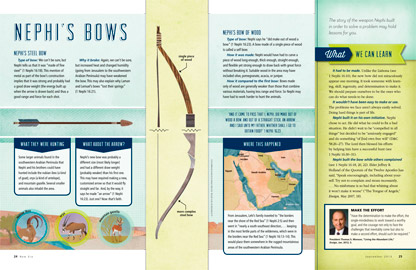
Nephi also learned to show initiative when faced with severe difficulties. His ability to feed his family was threatened when his bow made of fine steel was broken. He made a decision that saved his family. While others complained, he set a self-imposed goal: To make a bow of wood and to put it to work. Nephi would have had to carve a piece of wood long enough, thick enough, straight enough, and flexible yet strong enough to draw back with great force without breaking it. Suitable wood in the area may have included olive, pomegranate, acacia, or juniper.

Nephi Finds Food While Others Complained

But it’s what he did next that sets Nephi apart. He went to his spiritual leader to seek his counsel. And it came to pass that I, Nephi, did make out of wood a bow, and out of a straight stick, an arrow. … And I said unto my father: Whither shall I go to obtain food?

Nephi chose to act. He did what he could to fix a bad situation. He didn’t wait to be “compelled in all things” but decided to be “anxiously engaged” and to do something “of [his] own free will” (D&C 58:26–27). The Lord then blessed his efforts by helping him to have a successful hunt (1 Nephi 16:29–31). His goals were not just self-imposed goals; they were goals that saved his family.

Clay Christensen and Ideas That Change The World

Clayton M. Christensen has put this same lesson to work. As a world-renowned innovation expert and the Kim B. Clark Professor of Business Administration at the Harvard Business School, he has bit of experience with showing initiative. Throughout his book, The Power of Everyday Missionaries, Clay describes repeatedly how he has used self-imposed goals to bring about incredible changes in his own life and in the lives of others. No simple quote — Just lots of inspiring counsel from one who knows, from one who learned by doing.

I have learned for myself the importance of showing initiative. It helps us to aim high, to stretch ourselves and our bowstrings, and to reach new goals. It especially helps when we seek counsel from a trusted spiritual leader. And I know that by so doing, we may save our ourselves and our families.

Nephi's Bows

Nephi’s Bows

Article: Nephi’s Bows

PDF: Nephi’s Bows

——– End of Post ——–
WebCredits—List of web resources used in this post but not explicitly credited above:

  • Photo, Mongolian Archer—www .pinterest.com/jurekes/arco/
  • Book, The Hunger Games, Suzanne Collins (2008, Scholastic Press, New York NY), ISBN 978-0-439-02348-1
  • Painting, Nephi Finds Food While Others Complained—www.lds.org/manual/book-of-mormon-student-manual/chapter-5-1-nephi-16-18
  • Photo, Ideas That Change The World—www.claytonchristensen.com
  • Book, The Power of Everyday Missionaries: The What and How of Sharing the Gospel, Clayton M. Christensen (2012, Deseret Book, Salt Lake City UT), ISBN 978-1-60907-315-2 (paperbound), 978-1-60907-316-9 (hardbound)
  • Article, “Nephi’s Bows”, New Era, Sep 2013, www .lds.org/new-era/2013/09/nephis-bows?lang=eng
    or www.lds.org/bc/content/shared/content/images/magazines/new-era/2013/09/ne13sep24-25-000-nephis-bows.pdf

——– End of WebCredits ——–

Privileges, Potentials And Principles

GlassesHaving trouble seeing, you say? My glasses work great. They really help me see a lot better. Here, put them on — I’m sure they’ll work for you, too. No, really, try them…

Swiss countryside through train window

Swiss Countryside Through Train Window

Have you ever noticed how we all see things differently? I’ve had experiences in which, **POP**, my vision changes and I see things in a totally new light. For example, as we traveled by train from Switzerland to Italy, our cabinmate happened to be a young Swiss woman returning from home to her studies in Italy. Out the window, I saw with interest how the scenery changed from the über neat, carefully kept Swiss houses, each looking like a music box cottage, to the houses of the Italian countryside, with a few roof tiles askew and some external wall plaster that needed patching. Initially, I was disappointed with some of the residents of Italy, thinking, “Don’t they care?” I mentioned it to our new student friend, and she said simply, “Yes, isn’t it quaint?” **POP** I began to see these dwellings through her eyes — Instantly, I got it, and in place of the seemingly dilapidated houses I had seen in my mind’s eye just a moment before, the homes looked lovely to me. Suddenly, I couldn’t make these homes stay in the train window long enough, and I missed them after they disappeared from view. I thanked our friend, and I was stunned by the speed of the process by which she helped me to adjust my vision.

Sometimes, the needed adjustment is of little consequence. For example, who knew of the potential to use one’s body as a percussion instrument?

At other times, however, the needed adjustment may indeed be costly, especially when we underestimate our privileges or our potential:

As Dieter Uchtdorf is teaching, the costs can be great of not seeing my own potential. The potential for poor vision increases as I base my views on poor principles. Since I live in a world where principles are prized less and less, where principles are more and more mocked and scorned, discarded as a garment in a hot furnace, sad experience has taught me the importance of seeing on a higher plane.

Young Man Adjusting His Vision

Young Man Adjusting His Vision

I have learned for myself that I achieve little or nothing when I fight against God — That’s when I fail. In contrast, I am most successful, I achieve things of eternal importance, when I succeed in getting my understanding to **POP**, when I adjust my vision, when I see others as the Lord sees them, when I see myself as the Lord sees me. And I have learned for myself that this is true for each of us, for all of us.


——– End of Post ——–

WebCredits—List of web resources used in this post but not explicitly credited above:

  • Drawing, glasses—www.123rf.com/photo_8284355_cartoon-eyes-with-glasses.html
  • Photo, “Swiss Countryside Through Train Window”—graphics.stanford.edu/~lucasp/pictures/switzerland/countryside/
  • Address, “Your Potential, Your Privilege”, Dieter F. Uchtdorf, LDS General Conference, Apr 2011—www .lds.org/general-conference/2011/04/your-potential-your-privilege?lang=eng
  • Photo, “Young Man Adjusting His Vision”—www.lds.org/media-library/images/youth/gospel-living?lang=eng&start=11&end=20#young-man-praying-738191
  • Photo, “Mountains Through Train Window”—mattstansberryblog.wordpress.com/2009/12/16/rome-day-5/train-window/

——– End of WebCredits ——–

train-window

Mountains Through Train Window