Reader Question: My pastor made a point in his sermon last week of stating that church should be about one thing only, deepening a personal relationship with Jesus Christ of the Bible. Not even making friends or strengthening family or marriage relationships, just to learn about Jesus, that’s it, by studying the Bible, verse by verse. He said to do anything else puts the focus on us and our needs, not His. I think this is a real line in the sand. And instead of socializing with other believers outside of church, we should go into our room, shut the door, read the Bible and pray to Jesus, the one and only God. Not just the one and only God “for us”, the only one anywhere. What are your thoughts on this?
To gather an answer to your question, we talked to our adult kids. We also asked our local missionaries, because we knew they could help us. The answer from our local elders was the same as from our family: Part of a deeper personal relationship with Jesus Christ is trying to become like Him, to act like Him, to treat others as He did. Christ “went about doing good” and so should we. Christ served others all His life by being among them and commanded us to become like Him and follow His example: “Feed my lambs.” We believe that serving others as Christ would serve them deepens our understanding of Christ in real life application, not just in theory. By reading and studying the scriptures, you will find that Christ wants us to love and serve one another.
If you and I were to ask Christ directly, we think that He would say that the focus IS on us and our needs. What Paul calls “the heavenly gift” is the great Atonement worked on our behalf by the Savior. The ultimate aim of that gift is to bring us, the spirit sons and daughters of a loving Heavenly Father, back into His presence. To qualify for that, we must learn to be like the Savior; patient, obedient, kind, generous, and so forth. Studying Jesus’ life and works will help us understand what we must do, but practicing Christlike attributes in families, at church and elsewhere, will help us to become like Him. Thus, the most effective way to live the life of a Christian is not to shut ourselves away from others but to live and serve among our brothers and sisters here on earth.
We hope this answers your question and helps you understand us better and how to become more like Christ.
And let us know how we may help you further! If you find that you have any questions about religious issues that you’ve been wondering about or that you haven’t been able to get good answers to, feel free to continue on discussion with us. It turns out that there are a lot of people with questions, and most of them have given up on churches as a source of answers. In our family, it is our experience that answers are out there, that God wants us to have them, and that they tend to be answers we like and have learned to appreciate. Working together with Heavenly Father allows anyone to find certainty in uncertain times.
-Dave and the MormonPanorama Family
——– End of Post ——–
WebCredits—List of web resources used in this post but not explicitly credited above:
Address, “Ask the Missionaries! They Can Help You!”, Elder Russell M. Nelson, LDS General Conference, Oct 2012—www .lds.org/general-conference/2012/10/ask-the-missionaries-they-can-help-you?lang=eng
Have you ever been so grungy that you clearly felt unclean? In St. Tammany Parish, Louisiana, in the days after Hurricane Katrina, I joined a group of volunteers to help people clean up and repair their homes in the communities of Covington and Mandeville on the north side of Lake Pontchartrain. It was grueling work, and we were truly grungy. We overnighted at a local church with no power and no shower facilities. Someone came up with the brilliant idea to make an outdoor camp shower by drooping a garden hose over the top of a fence as a makeshift shower. For modesty, tarps were thrown over the fences, allowing a couple hundred volunteers from a dozen states to take a decent shower. I was surprised that it felt so good to be clean after a long day of backbreaking labor—and from such a small and simple thing.
Staying Clean And Sober
I remember a close friend who worked very hard to stay clean, a young father with five small children. He had severe substance abuse problems with various substances, but he had recently developed a deeper desire to conquer them, to really lick it this time. On one visit, we had just sat down to talk with Jason and his wife, when he interrupted, “How do you do it, Dave? How do you get us to feel these things?” After that, we opened our hearts to each other like never before, and our souls were knit together like brothers. Each time, we would plan our next visit, a week away or more often a month away, depending on what he felt he needed for support. Sometimes, in the dead of night, he would just call me out of the blue and say, “Please come, Dave. I need your help. I need to stay clean.” These were some of my favorite moments, sitting and talking in the dark on the small stoop outside his home. But I simply could not go to see him often enough, and I looked forward to each visit with all my heart.
Getting Clean, Staying Clean
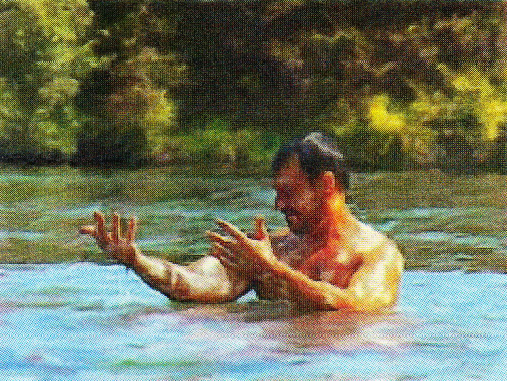
These experiences remind me of how I felt on the day I was baptized. I was eight years old, and I think I was prepared to understand its value. In the months leading up to it, I remember distinctly talking to some young friends who had been baptized recently about how if I were to do any big-time sinning, I had better do it quickly before I was baptized so that I could wash away all those wrongs. While I didn’t yet have the attitude that God wanted me to have in recognizing the sacrifices that His Son has made on my behalf, it was clear that I understood the meaning of the ordinance of baptism as a symbol of cleansed sins and living a new life.
So, here are some secrets of staying clean:
Recognize the need to get clean.
Commit to getting clean.
Put yourself in situations/places where you may stay clean.
Ask for clean help when you need it.
Be honestly curious. Learn more about staying clean.
I have learned for myself the importance of getting clean and staying clean. For me, the symbolic cleansing of baptism is a vital part of me doing so.
Alma Baptizing People (Mosiah 18:7-17)
——– End of Post ——–
Bonus Material:
1. Read or listen: Alma baptizing as people came into the church of Jesus Christ, Mosiah 18:7-17 (in The Book of Mormon)
2. Watch, listen, or read James E. Faust’s address regarding this sacred ordinance, entitled, “Born Again”. (Length: 18:02.)
Have you ever seen a person with a conspicuous disease such as leprosy? We read of an honorable military leader in the Old Testament, “a mighty man in valour, but he was a leper.” Naaman sought the help of God and then rejected it: the task was too small, too simple. But upon submitting to God’s counsel, upon bathing in the small river as instructed, he was cleansed. He was healed of the leprosy, and his skin was restored to the flesh of a baby.
As Heavenly Father established His teachings among mankind, He designated symbolic cleansing as an outward proclamation of an inward commitment to serve Him. By celestial design, the act of baptism is a small and simple thing. Note that God did this not to demand subservience as does a king, queen or any human magistrate but rather because He knows that, as humans, we are at our best when serving a Higher Source than self. When the Father sent His Son to bring us back to His teachings, he re-emphasized man’s need for baptism. After we strayed anew from those teachings, God did so as He restored His truths once again.
I was very young when I learned the value of all this. I grew up on a farm in Missouri in a friendly Mormon congregation, where a number of folks in the community decided to join us in our faith. Those who joined our church were baptized in our pond. Bob, a local college student, yearned to be baptized, and he wanted first to receive the permission of his parents, whom he loved dearly. For years they refused, and, as Bob waited for their hearts to change, after each time someone else was baptized, he would stay down at the pond. For long periods of time, he would cry out his soul to God for patience and understanding, with clenched fists and raised voice. I remember seeing him come up to the farmhouse, his eyes red and puffy, and I heard him say through tears how much he looked forward to his turn in our pond, when he could finally show his willingness to put his sins behind him. His earnestness made an impression on my young spirit, and to this day, each time I see a baptism, I see in my mind’s eye the intensity of Bob’s joy when he was finally able to do this for himself.
Short-sightedness and sin have made lepers of us all. A little symbolic cleansing can help.
Cleansing Hands
——– End of Post ——–
Bonus Material:
Watch, listen, or read Elder David A. Bednar’s entire address regarding the priesthood ordinance of baptism, entitled, “That We May Always Have His Spirit to Be with Us”. (Length: 16:33.)
——– End of Bonus Material ——–
WebCredits—List of web resources used in this post but not explicitly credited above:
Have you ever felt the delight of rebirth from restoring a garden, breathing new life into the soil with the work of your hands? I’ve found that digging a hole in the yard can be a great stress reliever. Whether the result be a vegetable garden, flower garden, water garden, or rock garden, the creative act of re-awakening a previously well-tended plot grows plenty of comfort and joy.
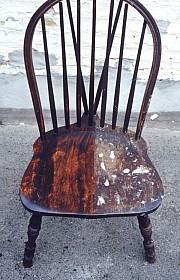
The same sense of recovering something of worth may come from restoring a chair or a desk. Furniture restoration not only reclaims the beauty of an old furniture friend, it can add to the elegance of your home, and the joy of revival can be just as satisfying as for a restored garden.
Have you had the joy of restoring the trust of a friend? A renewed confidence is more poignant if, as a headstrong loved one, I have turned myself from unruly ways, returning from an unwise path of my own obstinate will, back to the path of submitting to the will of another—And by so doing, discovering that he was always the wiser. While a recalcitrant, I treasured my errant ways, blindly unaware of my short-sightedness, until I rebuilt the foundation of the original shared trust that I had dismantled. The reawakened trust is especially sweet when for years my friend has invited me to return to his wiser ways.
My topic in this post is restoring a faith that has fizzled. Since Father Adam and Mother Eve, God has established His teachings among us. Because He loves us and because we are prone to wander, God gave us guidelines of good, better, best. And because we are prone to wander, we all have strayed from those guidelines, even when we know better. Each time a person strays, he or she may return through repentance. Each time a people strays, God always has sent someone to teach and persuade society yet again. That’s what He did with the Childrenof Israel, with the peoplein Christ’s day, and with the people who lived long after Christ. Watch how one person explains that he noticed a period of falling away (length: 2:04).
So what did God do? Even when I notice a broken chair or a disregarded plot of ground, I may choose to do nothing but simply to continue to neglect it. But when it comes to truth, God chose to restore the teachings that we had chosen to neglect. He sees our unyielding self, misguided intents, resistant societies—And He continues to see something of worth in us and sends someone to recover it. Watch as someone explains how she learned this for herself (length: 1:27).
Consider how Heavenly Father works with us. When we strayed from Adam’s teachings, God sent a babe in the bullrushes to bring us back to His ways. When we strayed again, He sent His Son as the Babe of Bethlehem to restore the Balm of Gilead, to redeem the world, and to bring us back to His ways. When we strayed yet again, He sent an uneducated, unvarnished farm boy of no renown, who asked important questions with confidence that God would reveal to him the answers. And God answered his prayers, because He trusted him to care for Hispeople and for His truths. He knew that the young man would tend them well and make them grow.
I have learned for myself the beauty and elegance of these truths that God has restored, truths that have allowed me to rebuild my trust in Him. I have renewed and strengthened my faith, so that no matter what happens, despite pain and trials and difficulties, I can be safe and secure. As I become a person that Heavenly Father may trust, as He rebuilds me into the simple beauty of a finished chair, I should not be surprised that, as did Harry T. Burleigh, I find “a religious security as old as creation, older than hope, deeper than grief, more tender than tears.” I know these things are true, that the faith that God has restored is true. Everyone on earth may know these truths for themselves, directly from God. And that’s why I’m a Mormon.
The Simple Beauty Of A Finished Chair
——– End of Post ——–
Bonus Material:
1. Harry T. Burleigh, the pioneering African-American singer/composer, published in 1916 the song Deep River, which speaks both of emancipation from physical captivity and of an assurance of spiritual relief. It was the first (and would prove to be the most popular) of Burleigh’s published vocal arrangements. He regarded these songs as “prayers” that proclaim “a religious security as old as creation, older than hope, deeper than grief, more tender than tears.” (See The Crisis, Page 29.) Watch Paul Robeson sing Deep River in 1940:
2. Not all moments in time are alike. Some moments are more pregnant with meaning than others. It’s a rare experience to see God eye to eye. Such was the experience of Joseph Smith. Elder Neal A. Maxwell tells of the experience of Professor Arthur Henry King’s response, after he read it, to the prophet Joseph Smith’s account of the First Vision. Brother King said: (By the way, this is the quintessential Englishman, with bowler hat and many degrees, and this is how he reacted to the First Vision.)
“When I was first brought to read Joseph Smith’s story, I was deeply impressed. I wasn’t inclined to be impressed; as a stylistician, I have spent my life being disinclined to be impressed. So when I read his story, I thought to myself: This is an extraordinary thing. This is an astonishingly matter-of-fact and cool account. This man is not trying to persuade me of anything. He doesn’t feel the need to. He is stating what happened to him, and he is stating it not enthusiastically, but in a quite matter-of-fact way. He is not trying to make me cry or feel ecstatic. That struck me, and that began to build my testimony, for I could see that this man was telling the truth. And his was not the prose of someone who was trying to work it out and make it nice. It is the prose of someone who is trying to tell it as it is, who is bending all his faculties to expressing the truth and not thinking about anything else. And above all, though writing about Joseph Smith, not thinking about Joseph Smith, not thinking about the effect he is going to have on others, not posturing, not posing, but just being himself.” (1991 CES Old Testament Symposium.)
All of us may know for ourselves that God has restored the fulness of the gospel to us through the prophet Joseph Smith. The Book of Mormon isn’t just a popular musical; it’s a book that changes lives every day. Will yours change?
3. Come, Thou Fount Of Every Blessing, traditional American hymn, arrangement by Mack Wilberg, sung by Mormon Tabernacle Choir:
4. Watch how God prepared to restore the unchanged gospel of Jesus Christ through Joseph Smith’s search for truth. (Length: 19:18.) Read also in Joseph’s own words.
5. Watch a motion picture about the life and legacy of Joseph Smith, the founding prophet of The Church of Jesus Christ of Latter-day Saints. (Length: 1:02:04.)
6. Watch, listen, or read President Boyd K. Packer’s entire address regarding these restored eternal truths, entitled, “The Standard of Truth Has Been Erected”. (Length: 16:37.)
——– End of Bonus Material ——–
WebCredits—List of web resources used in this post but not explicitly credited above:
Photo, family restores garden—www. watergardengems.com/index/index.php/about-us/our-testimonials
There’s an expression that some people are “closed books”. It indicates someone who cannot be easily understood, someone unfathomable or puzzling, while others are “open books”. One may feel this way about a book of sacred writings. Some people I know feel that holy books are closed to them. Other friends feel that a book of God has things that speak specifically to them.
As a youth long ago, I learned to love the scriptures. To me, they are open books. In Seventh Grade, I remember starting to see specific verses as if they were a good friend. Learning, pondering, searching, and memorizing scriptures is like filling a cabinet with friends, values, and truths that can be called upon any time, anywhere in the world:
One’s feelings are key to an open book. If I love an author, it’s usually because I love the way the writer uses words, how I feel about how she or he expresses thoughts in writing. Some authors I like because they express thoughts similar to mine, while I love others, having expressed thoughts so distinct from mine, due to the way they open my mind to new things. What’s essential is less the words of sacred authors and more how their meaning resonates both to my mind and to my heart. God combines intellect and inspiration to tailor something personal to me, that nourishes my spirit, food that I need to feed my soul on a daily basis. Watch how he taught the Children of Israel this lesson:
I particularly love how I have come to see the scriptures as a proactive attempt on God’s part to be less puzzling, and I understand that openness to spiritual feelings is an important part of that. These spiritual feelings come in whispers to my soul. Did not our heart burn within us, …while he opened to us the scriptures? Heavenly Father speaks directly to his children through the still, small voice of the Holy Spirit. One of life’s true paradoxes is that through these whispered feelings and thoughts, he does wonderful works through us. By small and simple things, God brings to pass great things. “…by very small means the Lord doth confound the wise and bringeth about the salvation of many souls.”
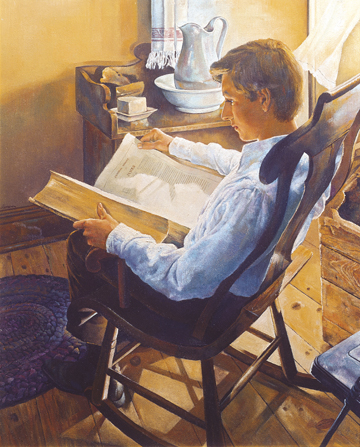
As a boy, Joseph Smith learned from his parents to trust the scriptures. He learned to read by them, studied them, and struggled to understand them better. When reading James 1:5-6, he learned to ask important questions with confidence that God would reveal to him the answers. By following those answers, Joseph was able to help his family find certainty in uncertain times.
The epitome of the power of the small and the simple is expressed by the essence of this Christmas season—By a babe long ago in a manger in Bethlehem. Watch how we may use his scriptures to make small and simple changes to our actions in order to bring more peace into the world.
Christ wants all of us to feel safe and secure, even when we have pains and troubles, big or small. I have learned for myself that he has given us the scriptures to guide us away from ideas that lead us to mistakes and regrets and towards peace and happiness, both for us and for those near and dear to us. From our family to yours, may you have the happiest and holiest of holidays.
——– End of Post ——–
Bonus Material:
1. Watch how a teenage competition through a maze is used as an analogy to show how the scriptures help us get through life. (Length: 10:02.)
2. Watch how this teacher encourages young men to search the scriptures. (Length: 1:41.)
——– End of Bonus Material ——– WebCredits—List of web resources used in this post but not explicitly credited above:
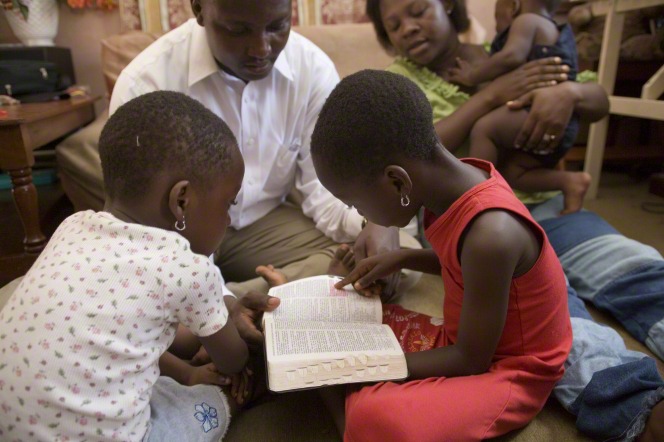
Photo, family scripture study—www. lds.org/media-library/images/scripture-study?lang=eng#family-scripture-study-208903
Video, “Words with Friends”—www. youtube.com/watch?v=IyMlkkkcbfs
Illustration, Joseph searching scriptures—www. lds.org/media-library/images/gospel-art/church-history?lang=eng&start=1&end=10#joseph-searching-scriptures-37717
This morning, I was struck by this thought-provoking sentence: “I don’t know one of [my own circle of girlfriends] who doesn’t have feelings of lingering discomfort regarding her own sexual past.” I read this in a footnote to a talk in a recent LDS General Conference interestingly titled, “The Moral Force of Women.”
The entire two-paragraph context by author Jennifer Moses is good:
So here we are, the feminist and postfeminist and postpill generation. We somehow survived our own teen and college years (except for those who didn’t), and now, with the exception of some Mormons, evangelicals and Orthodox Jews, scads of us don’t know how to teach our own sons and daughters not to give away their bodies so readily. We’re embarrassed, and we don’t want to be, God forbid, hypocrites.
Still, in my own circle of girlfriends, the desire to push back is strong. I don’t know one of them who doesn’t have feelings of lingering discomfort regarding her own sexual past. And not one woman I’ve ever asked about the subject has said that she wishes she’d “experimented” more.
In fact, the entire WSJ article is good, and not only because it stirred up a strident response. (See “Why Do We Let Them Dress Like That?”, Jennifer Moses, Wall Street Journal, 19 Mar 2011, Page C3). Here is a selection from the address that referenced Moses’ article:
[In the view of many in the world, in sharp contrast to God’s view,] there has long been a cultural double standard that expected women to be sexually circumspect while excusing male immorality. The unfairness of such a double standard is obvious, and it has been justifiably criticized and rejected. In that rejection, one would have hoped that men would rise to the higher, single standard, but just the opposite has occurred—women and girls are now encouraged to be as promiscuous as the double standard expected men to be. Where once women’s higher standards demanded commitment and responsibility from men, we now have sexual relations without conscience, fatherless families, and growing poverty. Equal-opportunity promiscuity simply robs women of their moral influence and degrades all of society. In this hollow bargain, it is men who are “liberated” and women and children who suffer most. (“The Moral Force of Women”, D. Todd Christofferson, LDS General Conference, Oct 2013. )
In his address, Christofferson also teaches us the importance of appreciating everyone’s influence for good, regardless of the ways they work all day: “A pernicious philosophy that undermines women’s moral influence is the devaluation of marriage and of motherhood and homemaking as a career. Some view homemaking with outright contempt, arguing that it demeans women and that the relentless demands of raising children are a form of exploitation. They ridicule what they call “the mommy track” as a career. This is not fair or right. We do not diminish the value of what women or men achieve in any worthy endeavor or career—we all benefit from those achievements—but we still recognize there is not a higher good than motherhood or fatherhood in marriage.”
In a second footnote are cited important words from another address: “If being ‘selfless’ means a woman must give up her own inner identity and personal growth, that understanding of selflessness is wrong… But today’s liberationist model goes too far the other way, stereotyping women as excessively independent of their families. A more sensible view is that husbands and wives are interdependent with each other… The critics who moved mothers from dependence to independence skipped the fertile middle ground of interdependence. Those who moved mothers from selflessness to selfishness skipped the fertile middle ground of self-chosen service that contributes toward a woman’s personal growth. Because of these excesses, debates about the value of motherhood have, ironically, caused the general society to discount not only mothers but women in general.” (“Motherhood and the Moral Influence of Women”, Bruce C. Hafen, World Congress of Families II, Geneva, Switzerland, Plenary Session IV, 16 Nov 1999.)
Some may assume that these thoughts refer to virtue, to dressing modestly, or to the value of a working woman, rather than viewing them as a related whole. For me, the issue here is one of influence and of power. Women wield power and influence in diverse ways, and everyone should appreciate good work, independent of where a woman chooses to do it. I have learned for myself that, regardless of our views, it is selfish to say unkind things. We can learn to use our power and influence to build rather than to belittle, even if a person makes choices we would not make for ourselves. Women should not limit themselves to roles that others define for them. The far-reaching effects of the power and influence of women is well described in and certainly not limited to the why-do-we-let-our-kids-wear-immodest-clothes article by Jennifer Moses, Matt Walsh’s …Me?-Ha!-I-WORK! post, Sheri Dew’s two-are-better-than-one talk, or Julie Beck’s mothers-who-know address. “The world’s greatest champion of woman and womanhood is Jesus the Christ.” (Daughters in My Kingdom: The History and Work of Relief Society, Page 3.)
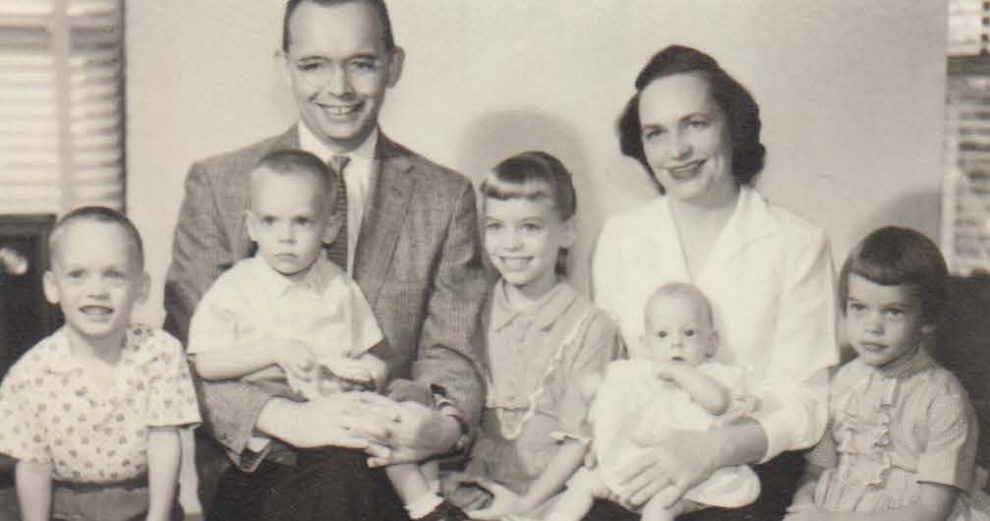
Early in her life, my wife nurtured a strong desire to be a woman of power and a woman of influence. She decided that she could do that most effectively by choosing to stay at home to raise a family. Her influence on our six adult children and on their families cannot be measured. That is influence; that is power. We are grateful for her wisdom to wield these skills in such a way as to have a true impact on society.
——– End of Post ——–
WebCredits—List of web resources used in this post but not explicitly credited above:
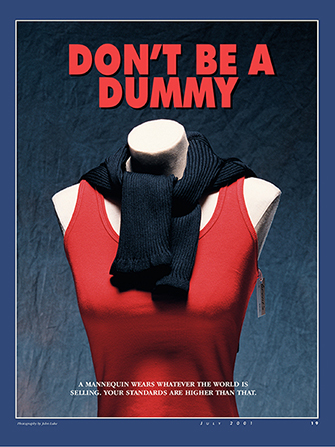
Poster, Don’t Be A Dummy: A mannequin wears whatever the world is selling. Your standards are higher than that.—www.lds.org/media-library/images/mormonads/dress-and-appearance?lang=eng#mormonad-dont-be-a-dummy-1118328 [Church standards of modesty apply equally to all genders.]
Poster, Don’t Short Change Yourself: The way you dress advertises your standards. Send the right message. (See For The Strength Of Youth, P. 8.)—www. lds.org/media-library/images/mormonads/dress-and-appearance?lang=eng#mormonad-short-change-1118313 [Church standards of modesty apply equally to all genders.]
Article, “Why Do We Let Them Dress Like That?”, Jennifer Moses, Wall Street Journal, 19 Mar 2011—online.wsj.com/news/articles/SB10001424052748703899704576204580623018562
Address, “The Moral Force of Women,” D. Todd Christofferson, LDS General Conference, Oct 2013—www. lds.org/general-conference/2013/10/the-moral-force-of-women?lang=eng
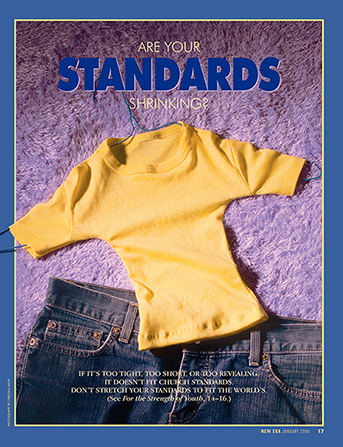
Poster, Are Your Standards Shrinking? If it’s too tight, too short, or too revealing, it doesn’t fit church standards. Don’t stretch your standards to fit the world’s. (See For The Strength Of Youth, P. 14-16.)—www. lds.org/media-library/images/mormonads/dress-and-appearance?lang=eng#mormonad-standards-shrinking-1118383 [Church standards of modesty apply equally to all genders.]
Address, “Motherhood and the Moral Influence of Women,” Bruce C. Hafen, World Congress of Families II, Geneva, Switzerland, Plenary Session IV, 16 Nov 1999 —worldcongress.org/wcf2_spkrs/wcf2_hafen.htm
Blog Post, “You’re a stay-at-home mom? What do you DO all day?”, Matt Walsh—themattwalshblog.com/2013/10/09/youre-a-stay-at-home-mom-what-do-you-do-all-day/
Address, “It Is Not Good for Man or Woman to Be Alone”, Sheri L. Dew, LDS General Conference, Oct 2001—www. lds.org/general-conference/2001/10/it-is-not-good-for-man-or-woman-to-be-alone?lang=eng
Address, “Mothers Who Know”, Julie B. Beck, LDS General Conference, Oct 2007—www. lds.org/general-conference/2007/10/mothers-who-know?lang=eng
Book, Daughters in My Kingdom: The History and Work of Relief Society (2011, Intellectual Reserve, Inc., United States of America)—www. lds.org/relief-society/?lang=eng
A friend just shared this Vocal Point video with me, and an entire post popped in my head. The song is “(I Want To See You Be) Brave,” by Sara Bareilles. I thought of my wife, Kim, of our six adult kids and their families. I especially liked the sign that reads, “When I talk to new people.”
As a Mormon, as a member of The Church of Jesus Christ of Latter-day Saints, I believe that we lived with God before we were born. True of anyone. And by celestial design, none of us remember — It was all veiled at birth. For eons before we came here, we studied hard, acquired knowledge, and learned skills, all with the goal of trying our guts out to live as God had taught and to do whatever we could to keep ourselves and others on the narrow path back to him. As we prepared with him for the moment of our birth, we knew that we would learn more from life on earth, because here we would be able to learn to walk not by memory, not by sight, but by faith, for the first time making decisions on our own in an environment where Heavenly Father was no longer around. As he sent us off, I wonder if he was singing to us a similar pre-lullaby message of “I want to see you be brave!”
This idea of a pre-existence changes many a perspective. I see my body not as mine, not to do with as I please, but as a temple of God, a gift from him, a house for my spirit now that I’m no longer with him. Such a view demands that I treat my body with respect and not with selfishness. The idea of a pre-mortal life and the idea of your body being a temple and not your own are ideas that permeate the popular post of Mormon blogger Seth Adam Smith, “Marriage Isn’t For You” (at his blog or at Huffington Post). His earthly father taught him, “Marriage isn’t for you. It’s not about you. Marriage is about the person you married.” While I heartily agree, I also counsel our kids as they head to the altar that marriage is so dang fun (for themselves as well as for their spouse).
These ideas and others are discussed concisely in the LDS Family Proclamation. These ideas help protect me, keep me be safe and secure. These perspectives, these teachings, are why families are so important. Families help us get ourselves back to God.
And in addition to giving us a family to help, God went further to give us another gift, both urgent and important. He allowed us to have a portion of his power. He gave us his priesthood, the authority to act for him, to do what he would do, if he were here with his amplearm around us, whispering what he would like us to know, to do, to be, to become. The priesthood of God isn’t for some and not for others — It’s for any of us, for all of us. It applies equally to people of any gender, in any country, of any position in life. For example, watch how Sheri Dew answers the great question: “In the Church of Jesus Christ of Latter-day Saints, what do women get?”
I can see how God sent ALL of us here well prepared, not just to thrive, but to fight to find our way back. When we’re unsure of the path, he continues to guide us. We call that prayer, and it works like a phone. With a bit of effort, it’s a two-way communication device. Beats a cell phone or Star Trek communicator with a stick.
Dieter Uchtdorf taught us to be brave against doubt when he said, referring to another’s phrase which was first penned in 1924: “It’s natural to have questions—the acorn of honest inquiry has often sprouted and matured into a great oak of understanding. One of the purposes of the Church is to nurture and cultivate the seed of faith—even in the sometimes sandy soil of doubt and uncertainty. Therefore, my dear brothers and sisters—my dear friends—please, first doubt your doubts before you doubt your faith.” (See F.F. Bosworth, Christ the Healer (1924), Page 23, as quoted in “Come, Join With Us”.)
Most importantly, these perspectives shift my thinking, so that I tend to view life through a lens of patience and peace. These ideas give me hope and humility. Seth’s dad is spot on — It isn’t all about me. Sometimes, I don’t want my stinkin’ thinkin’ shifted, but if I learn to adjust my vision to a more godly perspective, I realize that it was short-sighted to fight the shift in thought. I hope it makes me a better husband, a better father, a better man, a better person. It helps me be brave.
From the lyrics of Brave: “Show me how big your brave is.”
Seeing Ourselves As Brave — Being Brave For Others
——– End of Post ——–
WebCredits—List of web resources used in this post but not explicitly credited above:
Video, “Brave by Sara Bareilles—BYU Vocal Point (a cappella tribute)”—www. youtube.com/watch?v=XeX3r8j66Qk
Blog Post, “Marriage Isn’t For You”, Seth Adam Smith—sethadamsmith.com/2013/11/02/marriage-isnt-for-you/
Blog Re-post, “Marriage Isn’t For You”, Seth Adam Smith—
www. huffingtonpost.com/seth-adam-smith/marriage-isnt-for-you_b_4209837.html
Document, The Family: A Proclamation to the World—
www. lds.org/topics/family-proclamation
Video, “Lean on My Ample Arm”—www. youtube.com/watch?v=iWn48w7vX80
Hymn, “Lean on My Ample Arm”, music, recordings, lyrics—www. lds.org/music/library/hymns/lean-on-my-ample-arm?lang=eng
Video, “What Do LDS Women Get?”—www. youtube.com/watch?v=-QYlDLChzig
Address, “Come, Join With Us,” Dieter F. Uchtdorf, LDS General Conference Oct 2013—www. lds.org/general-conference/2013/10/come-join-with-us
Illustration, Seeing Ourselves As Brave — Being Brave For Others—https://www. lds.org/media-library/images/primary/illustrations?lang=eng#children-barking-dog-778662
If anyone knows our family, they know we are huge fans of the Lord of the Rings! I remember as a young boy listening to my Dad read the trilogy to me and my brothers as we laid in our beds. Dad would put all his emotions into it as he would get excited with us, laugh with us, be sad with us, and, yes, cry with us. You can imagine our joy when we heard the news that they were making the movies! Needless to say, we loved them as well!
There is one scene in The Two Towers (that wasn’t in the book, but we’ve since forgiven Peter Jackson!) that I have been pondering about a lot lately. In the city Osgiliath, Frodo hits a breaking point when his burden as a ringbearer seems too much to handle and all hope seems lost. He is about to give himself up to temptation and be captured when Samwise the Brave comes to rescue him. Sam then delivers one of the most epic speeches about overcoming adversity and fighting for what’s right.
As I have watched and rewatched this scene, I ask myself, “How many times do I feel like Frodo here?” And I ask you, how often do you feel helpless, alone, and without hope? We often hit similar breaking points where our load seems too heavy to bear. In these “Frodo” moments, we ask ourselves the same questions in Sam’s speech. These moments are the shadows and the darkness he spoke about. Even Joseph Smith had Frodo moments in the Sacred Grove and in Liberty Jail when he cried out, “Oh God, where art thou?” (D&C 121:1.)
To those who feel, or have felt, this way before, I empathize with you. I too have come to up against the wall that seems impossible to get over and move on. I have longed for a “Sam” to come rescue me and tell me everything is going to be alright. I’m here to tell you that God will come! He is our Sam in the story. He reminds us that “even darkness must pass. A new day will come! And when the sun shines, it will shine out the clearer!” God reminds us of our purpose and “what [we’re] holding on to.” (See Joseph Smith-History 1:16-17 and D&C 121:7-10 for God’s response to Joseph’s Frodo moments.)
I want to share a story of one my own Frodo moments. A little over a year ago I was going through a really hard time. I had just lost the girl I loved, I was struggling with finding a major at school, work was wearing me down, and it just seemed like anything I desired was always out of reach. I felt helpless, abandoned, and hopeless. I’m sure I wearied my Heavenly Father with my endless prayers of gloom and sadness. My Sam in this story came in the form of a poem that I wrote. It brought peace and hope to my life as I was able to put my thoughts into words. It inspired me to keep going:
In the same place
In the same place night after night,
My corner chair that fits just right,
I examine my considered plight,
Which has become my endless fight.
In the same place I try to see,
While Pandora sings soothingly
To my troubled and longing heart,
The pathway that I now should start.
In the same place when all retire,
I earnestly search for the fire
That drives, that pushes, and inspires,
To achieve heart’s deepest desire.
In the same place night after night,
Past memories dance into my sight.
I muse, I smile, and seldom cry,
But often time think, “why, oh why?”
In the same place through thick and thin,
I overcome the pain within.
Arise, go forth, begin to mend!
Surprises will come around the bend.
As I wrote this, I could feel the Lord’s love surround me. I was not alone, help was given, and hope restored. God is ever aware of lives and what we are passing through in this very moment. He loves us! We may feel like Frodo in our own personal Mt. Doom hanging on for dear life. The Lord, just as Sam did, reaches out to us when we are about to give up and says, “Don’t you let go!” I want you to know that your shadow IS only a passing thing, and surprises do come around the bend! I echo the words that King David said to his son Solomon, “Be strong and of good courage, and do it: fear not, nor be dismayed: for the Lord God, even my God, will be with thee; he will not fail thee, nor forsake thee, until thou hast finished all the work for the service of the house of the Lord.” (1 Chronicles 28:20.)
The Lord will not give up on you, so you shouldn’t give up on yourself! Look for the “Sams” in your life; I know you’ll find them. God answers our prayers in a variety of ways, often time through other people. May we also strive to be Sam in the lives of others.
I recommend these videos that helped me in times of need. They also touch on this topic:
I love the words of the narrator as we focus on his wedding ring at Time 2:53 and the kid at the door watching his parents pray at 2:34. When I walked in to see my own parents at prayer, I remember the whoosh of feelings of safety and security but mostly of sacredness.
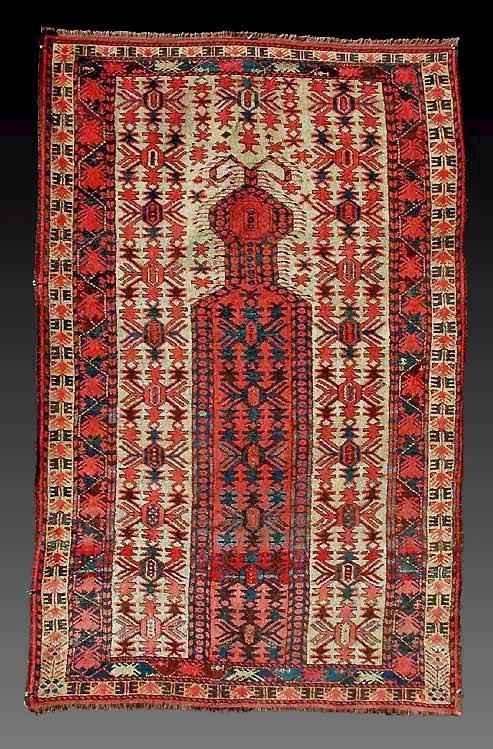
My favorite memory of the power of a prayerful life is one at work. I knocked on a friend’s office door; normally, he responds quickly with, “Come in!”, and I open the door. Sometimes, I’ll hear water running in the office bathroom as he makes ablution, and I know not to knock at the door for a few minutes after he returns to his office. But this day I was distracted and failed to notice that my knock at the door from without brought no invitation voiced from within. Out of habit, I called him by name, adding the customary honorific suffix, and opened the door. I found my elderly friend kneeling lowly on his prayer rug. It was such a holy moment. In a familiar whoosh of feeling, I was aware that I had missed the cues of the sounds at the sink. Having cleansed himself without as he focused on cleansing himself within, he was now talking with his Maker, expressing humility without as he voiced humility within. It was just like walking in on my parents at prayer. After prayers were done, we embraced; I apologized for disturbing a sacred moment. “Oh, I don’t mind. I am just doing my duty,” he said. I replied, “It is the duty of us all.”
When I think of my favorite moments of prayer, I will always see in my mind and in my heart an elderly man from Uzbekistan, with shoes removed from off his feet, kneeling submissively on sacred ground in his office, visible to none but to Him who sees all.
I shall be telling this with a sigh
Somewhere ages and ages hence:
Two roads diverged in a wood, and I,
I took the one less traveled by,
And that has made all the difference.
-Robert Frost
Vintage Prayer Rug
——– End of Post ——–
WebCredits—List of web resources used in this post but not explicitly credited above:
Photo, “Knock, And It Shall Be Opened Unto You”—westsoundmodern.wordpress.com/2011/05/11/go-away-im-washing-my-hair-2/knock-knock-3/
Enjoy reading our posts, and join in the discussions! We encourage a panorama of opinions with cordial dissent or support, and ask that comments be respectful and relevant to the post, allowing all to enjoy the shared thoughts and experiences. Entries subject to editing. Comments not in keeping with these standards may be removed at the discretion of blog editors.
 Reader Question:

















 Todd
Todd Dave
Dave Brendan Sweeny
 MormonPanorama
 Brian
Brian Brittany
 Mike
Mike Kim
Kim Kevin
Kevin Whit
Whit MormonPanorama